
Table of Contents
- Termite Inspection vs General Building Inspection: The Core Difference
- What a Building Inspector Looks At
- What a Termite Inspector Looks At
- Side-by-Side Comparison: Scope, Methods, Reports and Exclusions
- What Does a Termite Inspection Include?
- Building Inspection Limitations and Inaccessible Areas
- Why Book a Termite Inspection Before Buying a House
- How Often Should You Get a Termite Inspection?
- Frequently Asked Questions
Last Updated: October 5, 2026
Termite Inspection vs General Building Inspection: The Core Difference
A termite inspection and a general building inspection are two separate assessments with different scopes, and booking only one leaves half the property unchecked. A building inspector reviews the structure for defects and safety issues. A termite inspector, sometimes called a timber pest inspector, looks for live termites, damage and conditions that attract them. At Redback Pest Control Sydney, we have over 30 years of trusted experience, and the confusion between these two types of inspections is a common gap we see in pre-purchase due diligence.
Here’s the short version:
- A building inspection covers the structure: walls, roof, floors, foundations and safety hazards.
- A termite inspection covers timber pests: live activity, mud tubes, damaged timber and risk factors.
- A combined building and pest inspection books both at once, usually on the same visit.
The rest of this guide breaks down each scope, what gets excluded, and what to do when evidence turns up. NSW Fair Trading guide to building and pest inspections
What a Building Inspector Looks At
A building inspector checks the property for structural defects and safety problems. They work visually, room by room and outside in.
Typical checks include:
- Cracks in walls, ceilings and brickwork
- Roof condition, gutters and drainage
- Plumbing leaks and damp
- Footings and foundation movement
- Faulty wiring or unsafe stairs
- Poor drainage that directs water toward the home
The inspector reports on the property’s condition at the time of the visit. They do not test every pipe or open every wall. Their job is to flag visible defects and note anything they cannot access.
What a Termite Inspector Looks At
A termite inspector searches for timber pests and the conditions that invite them. This is a targeted assessment, not a general walk-through.
The focus areas are:
- Live termite activity in timber
- Mud tubes and termite mudding on walls or foundations
- Hollow-sounding timber
- Damaged timber and wood damage
- Discarded wings near windows or doors
- Moisture problems and poor drainage that attract pests
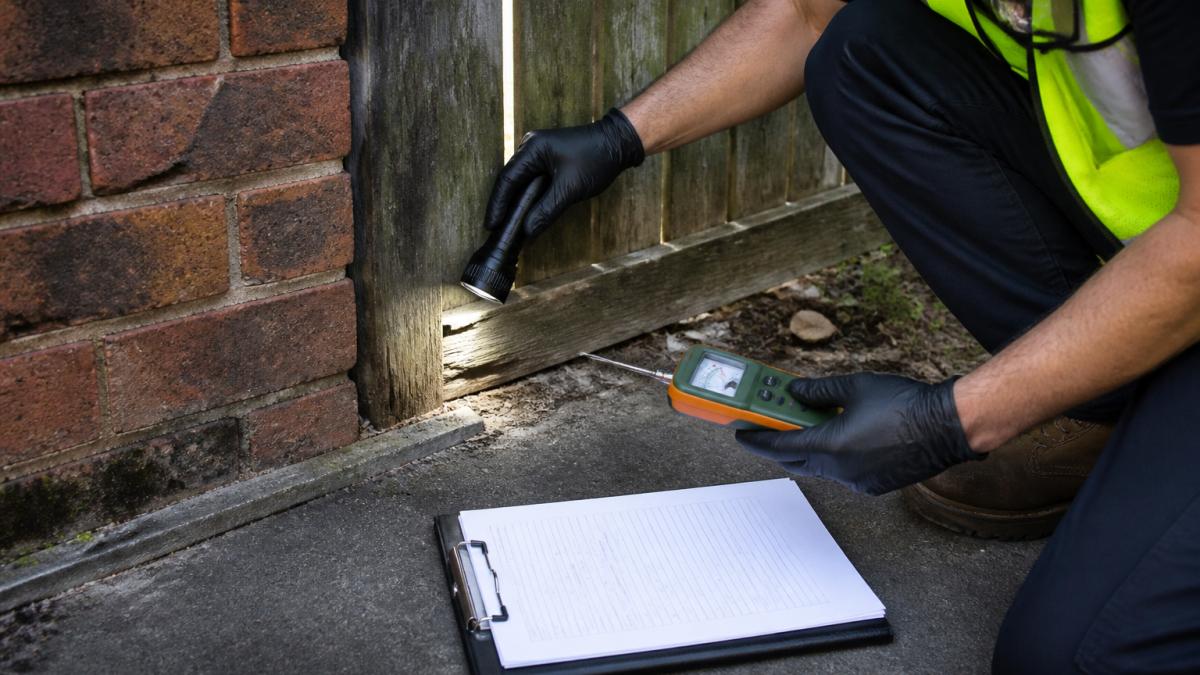
A qualified pest inspector taps, probes and uses tools like moisture meters and thermal cameras. Some teams also use trained detection dogs for hard-to-reach areas. Our commitment to quality is evident through specialized termite dog inspections.
Building Defects a General Inspection Flags
Building defects sit in the structural and safety lane. These include cracking, sagging rooflines, rising damp, failed waterproofing and unsafe balustrades.
A building inspector will also note plumbing leaks and poor drainage, but only as they affect the structure. They won’t tell you whether those damp conditions have attracted termites. That’s a different job.
Timber Pest Evidence Only a Termite Inspection Catches
Termite evidence hides where a general inspection doesn’t look. Live activity behind a skirting board, termite workings inside a door frame, or mudding in a subfloor void can all go unseen in a standard building report.
This is the gap that costs buyers. Hidden problems surface after settlement, and repair costs land on the new owner.
Side-by-Side Comparison: Scope, Methods, Reports and Exclusions
The clearest way to see the difference is a direct comparison. Scope, methods, deliverables and exclusions all differ between the two, and the gap between them is where most pre-purchase surprises live. Overlooking these structural nuances often leads to secondary issues like moisture intrusion, which makes a pre-purchase mold inspection an essential companion to your broader property assessment.
| Feature | General Building Inspection | Termite (Timber Pest) Inspection |
|---|---|---|
| Primary purpose | Assess structural condition and safety | Assess timber pest activity, damage and risk |
| Typical inspector | Licensed building inspector or building consultant | Suitably qualified timber pest inspector (often also licensed in pest management) |
| Core method | Visual, non-invasive, room-by-room and external | Visual, plus tapping, probing, moisture meter, thermal imaging where used |
| Areas checked | Walls, ceilings, roof space, subfloor, footings, drainage, stairs, balustrades | Interior timbers, subfloor, roof void, exterior timbers, fences, retaining walls, soil contact points |
| Report content | Defects, safety hazards, condition notes, inaccessible areas | Live activity, workings, damage, conducive conditions, risk rating, recommendations |
| Typical exclusions | Concealed areas, no pest search, no invasive testing | No structural or safety review, no invasive testing, inaccessible areas noted |
| Follow-up trigger | Major defect or safety concern | Live activity, damage, or high-risk conditions |
| Best used for | Structural due diligence before purchase | Timber pest risk assessment before purchase and ongoing monitoring |
A few practical points sit underneath that table:
- Neither report replaces the other. A building inspection won’t tell you whether termites are active behind a skirting board. A termite inspection won’t tell you whether the roof structure is sound.
- Qualifications differ. A general building inspector is not automatically qualified to assess timber pests, and a timber pest inspector is not automatically qualified to assess structural defects. Ask each inspector what they are licensed and insured to report on.
- Standards differ. Timber pest inspections are commonly carried out with reference to Australian Standard AS 3660 for termite management and AS 4349.3 for timber pest inspections. Building inspections are commonly carried out with reference to AS 4349.1. The standard shapes what is inspected, what is excluded, and how findings are reported.
- Deliverables differ. A building report typically reads as a condition and defect schedule. A timber pest report typically reads as a risk assessment with activity, damage, conducive conditions and recommendations.
- Exclusions are not fine print. Both reports will list areas that could not be accessed. Those exclusions are the single most useful part of either document, because they tell you where confidence stops.
Australian Standards for building and timber pest inspections
If you only book one, you are choosing which risk to leave unassessed. For most buyers, the combined building and pest inspection is the practical option because it closes both gaps in one visit.
What Does a Termite Inspection Include?
A termite inspection includes a visual check of accessible areas for timber pests, plus a written risk assessment. It covers the property’s timber and the conditions that attract termites.
A standard inspection covers:
- Interior timbers: skirting, door frames, architraves
- Subfloor and under-house areas where accessible
- Roof void and ceiling timbers
- Exterior timbers, fences and retaining walls
- Gardens, mulch and soil contact points
- Moisture and drainage issues
The inspector records what they find, notes any termite workings, and rates the risk. You get a report you can act on.
Building Inspection Limitations and Inaccessible Areas
Every inspection has limits, and honest inspectors say so up front. A visual inspection only covers what can be seen and reached.
Common inaccessible areas include:
- Wall cavities and closed-in spaces
- Roof voids with no safe access
- Subfloors blocked by stored goods
- Areas under decks or concrete slabs
- Locked rooms or sealed sections
When an area can’t be accessed, the inspector notes it in the report. That’s not a failure. It’s a warning that a hidden problem could exist there.
If your report lists inaccessible areas, treat them as unknown risk, not clear areas. Termite activity often hides in exactly those spots, and the cost of missing it lands on you after settlement.
Why Book a Termite Inspection Before Buying a House
A termite inspection before buying a house is your best protection against hidden timber damage. It gives you evidence before you commit.
Here’s why it matters:
- It reveals live activity and past damage
- It identifies conditions that attract pests
- It gives you use to negotiate or walk away
- It sets a baseline for future inspections
A building inspector might mention possible termite damage. That’s a signal to bring in a qualified pest inspector, not a substitute for one. If you’d rather not wait, our Termite Control service covers inspections and treatment, and it’s worth checking our Special Offers before you book. CSIRO information on termites and timber pests
What to Do If Evidence of Termites Shows Up
Finding termites isn’t a deal-breaker, but it changes the conversation. Act before settlement, not after.
Your next steps:
- Get a full timber pest assessment to map the extent
- Ask for a treatment quote before you finalise the price
- Use the findings to negotiate repairs or a price reduction
- Arrange treatment and a follow-up inspection after settlement
If the property has a history of termites, ask whether it was treated and what warranty applies. A past treatment doesn’t guarantee the problem is gone.
How Often Should You Get a Termite Inspection?
A termite inspection is recommended at least once a year for most properties. High-risk homes may need checks every six months.
Book more often if you have:
- Previous termite activity on the property
- Damp conditions or poor drainage
- Lots of timber close to soil
- A home in a known termite-prone area
Yearly inspections catch activity early, when treatment is simpler and cheaper. Skipping them lets damage build quietly. Australian Standard AS 3660 on termite management
After any termite treatment, book your next inspection before the warranty period ends. Most warranties depend on regular follow-up checks, and skipping one can void your cover.
Frequently Asked Questions
Do building inspectors check for termites?
Generally no. A standard building inspection is a visual assessment of structural defects, safety issues and general condition. It is not a timber pest assessment, so inspectors typically do not probe timber, check for mud tubes or inspect concealed areas for termite workings. Some inspectors note visible termite damage, but that is not the same as a dedicated termite inspection carried out by a qualified pest inspector. For full due diligence, buyers should commission both a building and pest inspection, either separately or combined (often called a combined building and pest inspection).
Is it worth getting a termite inspection before buying a house?
Yes. Termites can cause serious structural damage long before visible signs appear, and a general building inspection can miss hidden termite activity. A termite inspection before buying a house gives you a timber pest assessment of accessible areas, including checks for mud tubes, termite workings, hollow-sounding timber and damaged timber. If evidence is found, you can factor repair costs and termite treatment into your offer or negotiate with the seller. Skipping this step leaves you exposed to expensive hidden problems after settlement.
What does a termite inspection cover that a general building inspection may not?
A termite inspection focuses specifically on timber pests. It includes inspecting accessible timbers, probing for termite workings, checking for mud tubes and termite mudding, looking for discarded wings and live activity, and assessing conditions that attract pests such as poor drainage or plumbing leaks. A general building inspection covers structural defects, safety defects and overall property condition but does not typically include a timber pest assessment. The two scopes overlap only partly, which is why many buyers book a combined inspection.
How often should you get a termite inspection?
Most pest professionals recommend a termite inspection at least once a year, even if you have had a termite treatment. If your property is in a higher-risk area or has had previous termite activity, more frequent inspections may be advised. Regular yearly inspection helps catch early signs of termite infestation, such as mud tubes or damaged timber, before serious structural damage occurs. It also supports any warranty conditions attached to a termite treatment. A qualified inspector can advise on the right schedule for your property.
Termites don’t wait for settlement, and neither should your due diligence. If you’re buying a property or managing one, Redback Pest Control Sydney can help. We bring over 30 years of experience, a family-safe guarantee, specialised termite dog inspections and the Sentricon® system for lasting protection. Get a free quote and protect your timber before it costs you.