
Table of Contents
- Pest Control Campbelltown: How to Compare Local Providers
- What Pest Management Covers for Homes and Businesses
- Termite Inspection Campbelltown: What the Process Involves
- Pet-Safe Pest Control: What to Ask Before Booking
- Child-Safe Pest Control and Treatment Preparation
- How to Prepare for Pest Control Treatment
- How to Verify a Provider and Avoid Surprises
- Conclusion
- Frequently Asked Questions
Last Updated: October 14, 2026
Pest Control Campbelltown: How to Compare Local Providers
Finding reliable pest control Campbelltown wide starts with knowing what separates a thorough operator from a cheap one. This guide from Redback Pest Control Sydney covers the questions to ask, the quotes to compare, and the preparation that protects your family, pets and home. Most homeowners only discover the difference after treatment fails.
A proper pest management quote should itemise the inspection, the treatment method, the products used, the warranty period and any follow-up visits included. If a quote is a single lump sum with no breakdown, ask for detail before you sign.
Comparing local providers comes down to five things:
- Licensing and insurance, verified independently
- Written scope of works, not a verbal promise
- Treatment methods matched to the pest
- Warranty terms and what voids them
- Response times for callbacks and re-treatments
Australian Pesticides and Veterinary Medicines Authority regulates every product a technician applies, so any provider should name registered products on request.
Ask for the quote in writing before booking, and check whether the inspection fee is credited against treatment if you proceed. Some operators charge separately for both.
What a proper quote should include
A pest control quotation should list the target pest, the treatment method, the areas covered, the products applied, the warranty length and the total cost including GST. Anything missing from that list is a question you need answered before work begins.
Watch for quotes that exclude follow-up visits. Termite and cockroach treatments often need a scheduled return visit to confirm results, and a quote that omits this leaves you paying twice.
What Pest Management Covers for Homes and Businesses
Pest management covers inspection, identification, treatment and ongoing monitoring for residential and commercial properties. For businesses, it also supports hygiene compliance and documented service records that auditors and health inspectors may request.
Residential pest control typically protects kitchens, roof voids, subfloors, gardens and garages. Commercial pest control for restaurants, offices, schools and healthcare sites adds scheduled servicing, bait station monitoring and reporting.
Pests commonly treated in the region
The Macarthur and Wollondilly regions see steady pressure from several pests year-round:
- Termites, the highest-risk pest for timber-framed homes
- Cockroaches, particularly German cockroaches in kitchens
- Ants, including coastal brown and black house ants
- Spiders, including redbacks in sheds and gardens
- Rodents, which move indoors as temperatures drop
- Wasps and bee swarms, common in spring
- Bed bugs, a growing issue in rental properties
Seasonal patterns matter. Termite activity increases in warm, humid months, while rodents and cockroaches push indoors during cooler weather. A provider who plans treatments around those cycles will get better results than one running the same schedule all year.
CSIRO termite research documents how subterranean termites behave across Australian conditions, which is worth reading before you accept any treatment plan.
Termite Inspection Campbelltown: What the Process Involves
A termite inspection is a visual assessment of accessible timber, foundations, subfloor spaces and surrounding soil, combined with moisture and evidence checks. A thorough inspection also covers roof voids, fences, retaining walls and any timber within reach of the building.
Redback Pest Control Sydney uses specialised termite detection dogs alongside standard inspection methods. Dogs can pick up termite activity in concealed areas where visual checks fall short.
Ask any provider these questions before booking a termite inspection:
- Which areas will be inspected, and which are excluded?
- Will you provide a written report with photos?
- Do you use detection dogs or moisture meters?
- If activity is found, what are the treatment options?
If termites are confirmed, treatment options include baiting systems and chemical barriers. Redback Pest Control Sydney installs the Sentricon® system for termite control, a baiting approach designed to eliminate the colony rather than just the termites you can see.
A cheap inspection that skips the roof void or subfloor is not a real inspection. Damage found later in those areas is not covered by any warranty, because they were never assessed.
Pet-Safe Pest Control: What to Ask Before Booking
Pet-safe pest control means the products used, the application method and the drying time have all been chosen so your animals are not exposed to harmful residues. It does not mean chemical-free, and any provider claiming that is overselling.
Ask these four questions before you book:
- Which products will be applied, and are they registered for indoor use?
- How long must pets stay off treated surfaces?
- Are baits placed where pets and children cannot reach them?
- What should I do if my pet contacts a treated area?
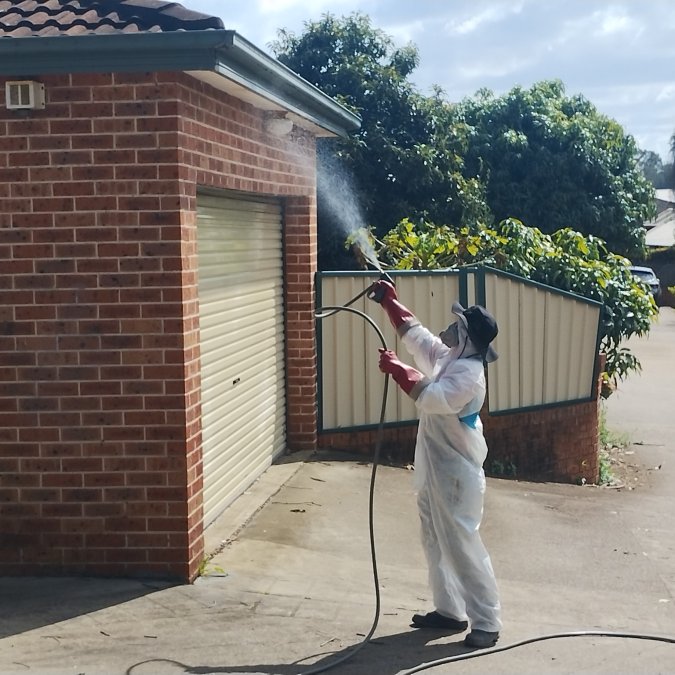
Redback Pest Control Sydney offers a family safe guarantee across its treatments, and technicians will walk you through the specific precautions for your property before they start.
The single most useful question is the re-entry time. Get it in writing, and follow it exactly, especially for indoor treatments.
Child-Safe Pest Control and Treatment Preparation
Child-safe pest control follows the same principle as pet safety: correct product selection, careful placement and a clear re-entry period. Baits and gels are usually placed in cracks and voids away from reach, while sprays are directed at skirting, gaps and harbourage points rather than open surfaces.
Before treatment day, do the following:
- Clear kitchen benchtops and put food away
- Move toys, pet bowls and bedding out of treatment areas
- Vacuum floors and wipe down surfaces beforehand
- Arrange for children and pets to be out during application
- Plan to stay out until the technician confirms it is safe to return
Ask the technician to show you where any baits have been placed so you can keep an eye on them. If you have very young children, say so upfront so the plan can be adjusted.
How to Prepare for Pest Control Treatment
Preparing for pest control treatment takes about an hour for most homes and makes the difference between a treatment that works and one that gets diluted by clutter.
| Step | What to Do | When |
|---|---|---|
| Clear access | Move furniture away from skirting boards and walls | Day before |
| Kitchen prep | Empty lower cupboards, wipe benches, store food in sealed containers | Day before |
| Pet and child plan | Arrange care off-site or in an untreated room | Day of |
| Vacuum and clean | Remove crumbs and debris that attract pests | Day before |
| Post-treatment | Ventilate rooms, wash exposed surfaces, wait out re-entry time | After service |
Expect to see more pest activity for a short period after treatment as insects move out of harbourages. That is normal, not a failed job.
How to Verify a Provider and Avoid Surprises
Verifying a pest control provider means checking three things independently: their licence, their insurance, and their track record. Do not rely on what a website says about itself. The verification gap is the one most comparison pages skip, so it is worth doing properly.
Licensing. Pest control technicians must hold a current licence to apply pesticides. In this state, licensing and pesticide use are overseen by the NSW Environment Protection Authority, so that is the right place to confirm a technician’s credentials. Ask for the licence number, then check it against the public register rather than accepting a logo on a van. A licence is held by an individual, not just a company, so confirm the person attending your property is the licensed one.
Insurance. Ask for a certificate of currency for public liability insurance. A certificate of currency is a snapshot showing the policy was active on the date it was issued, so check the date and the policy period, not just the presence of a document. If a technician damages a surface or a treatment affects a neighbouring property, insurance is what stands between you and the cost.
Track record. Read recent reviews for patterns rather than one-off complaints. A single bad review can reflect a bad day; a recurring theme about callbacks, no-shows or vague warranties is a signal. Look for reviews that mention the specific pest and the outcome, not just a star rating.
Documentation. Before work begins, confirm what you will receive afterwards. A proper provider supplies a written report or service record listing the areas treated, the products applied and any findings. For termite work, ask whether the report includes photos and a diagram of the property. For commercial sites, ask whether the documentation meets the record-keeping your auditor or health inspector expects.
Warranty terms. Get the warranty in writing and read the conditions that void it. Common conditions include failing to follow preparation instructions, undertaking your own treatment, or altering the treated area. A warranty you accidentally void is no warranty at all.
Who actually attends. Ask whether the person coming to your property is a licensed technician or a subcontractor, and whether the same person handles any follow-up. Continuity matters, because the technician who did the original treatment knows where baits were placed and what was found.
A quick checklist before you book:
- Licence number obtained and checked against the state register
- Certificate of currency for public liability insurance sighted and in date
- Recent reviews read for patterns, not isolated complaints
- Written scope, products and warranty confirmed before work starts
- Report or service record promised in writing
- Confirmation of who attends and who handles callbacks
Redback Pest Control Sydney has over 30 years of experience, services both homes and businesses including government sites, and provides a pest control warranty on completed work. For a free quote, book online or check current special offers.
Conclusion
Choosing a provider comes down to transparency: a written scope, named products, clear warranty terms and a technician who answers your questions properly. Redback Pest Control Sydney offers family safe treatments, specialised termite dog inspections and the Sentricon® system for termite protection, backed by three decades of local experience. Get a free quote and protect your property before the next season hits.
Frequently Asked Questions
How do I choose a pest control service in Campbelltown?
Start by checking the licence and insurance of each provider you shortlist. Ask for an itemised quote that separates the inspection, the treatment and any follow-up visit. Confirm what guarantee applies and whether a re-treatment is included if pests return. A provider who has serviced the area for years will know the local pest risks and can explain why a particular treatment suits your property type.
How can I prepare my home for pest treatment?
Clear kitchen benches and floors, store food in sealed containers, and move pets and their bedding away from treatment zones. If you are unsure about anything, ask the technician for a written preparation checklist before the visit. Preparation matters most for indoor treatments, because it lets the technician work safely and reach the areas where pests are active.
How long should pets and children stay away after pest treatment?
The re-entry time depends on the products used and the treatment method, so ask the technician for a specific answer before they start. Some treatments allow re-entry once surfaces are dry, while others need longer. If you have a pet-safe or child-safe pest control requirement, state it when you book so the technician can select suitable products and give you clear guidance.
What are the signs that a home may need termite inspection?
Watch for mud tubes on walls or foundations, hollow-sounding timber, bubbling paint, and discarded wings near windows. These signs are not proof of an active infestation, so a professional termite inspection Campbelltown homeowners book should confirm what is happening. Early detection protects wooden structures from damage that is expensive to repair, which is why inspections are worthwhile before you buy a property.