

Table of Contents
- Why Older Homes Hide Termite Damage So Well
- Sign 1: Hollow-Sounding or Soft Timber
- Sign 2: Mud Tubes on Foundations and Walls
- Sign 3: Discarded Wings and Termite Swarmers
- Sign 4: Frass, Droppings, and Tiny Holes in Timber
- Sign 5: Bubbling, Blistering, or Peeling Paint
- Sign 6: Cracks in Walls and Ceilings
- Sign 7: Buckling Floors, Warped Frames, and Stiff Windows
- What to Do After Finding a Suspected Sign
- Frequently Asked Questions
Last Updated: October 16, 2026
Why Older Homes Hide Termite Damage So Well
Older homes hide termite damage because their construction creates dark, damp cavities termites reach without breaking the surface. Timber framing, brick piers, and layered flooring leave gaps that stay hidden for years, so by the time a homeowner notices a soft floorboard, the colony has often been feeding a long time. At Redback Pest Control Sydney, we have inspected these properties for over 30 years, and the pattern rarely changes: the damage is found last, not first.
Construction Methods That Conceal Infestations
Older houses were built to last, not to be inspected. Solid timber bearers sit close to the ground, subfloor spaces are low and dark, and wall cavities have no access points. Termites enter from the soil, travel through hidden voids, and feed on structural timber you never see.
- Solid brick or rendered walls with no inspection gaps
- Timber stumps and bearers close to damp soil
- Original hardwood floors laid over multiple layers
Each feature gives termites cover, the older the home, the more places to hide.
How to Tell If Timber Has Termite Damage: The Tap-and-Feel Test
The tap-and-feel test checks exposed timber for termite damage: tap with a screwdriver handle and listen for a hollow or papery sound, then press your thumb in to feel for softness.
Here is how we run it:
- Tap along skirting boards, door frames, and exposed floorboards
- Listen for a dull, hollow, or empty sound rather than a solid knock
- Press firmly with your thumb where the sound changes
- Check for timber that flexes, crumbles, or feels spongy
- Note any spot where a screwdriver tip sinks in easily
A solid knock means sound timber; a hollow ring means the inside may already be eaten out. This test finds termite damage early, but only on exposed timber, hidden damage in walls needs a professional inspection.
Sign 1: Hollow-Sounding or Soft Timber
Hollow-sounding or soft timber is the most common early sign of termite damage. Termites eat timber from the inside out, leaving a thin outer shell that looks normal but sounds empty when tapped.
Older homes are especially vulnerable because original hardwood takes years to show external wear. A door frame can look perfectly painted while the core is hollow.
Painting over soft timber hides the problem for a few more months but does nothing to stop the colony. The damage keeps spreading behind the fresh coat.
Sign 2: Mud Tubes on Foundations and Walls
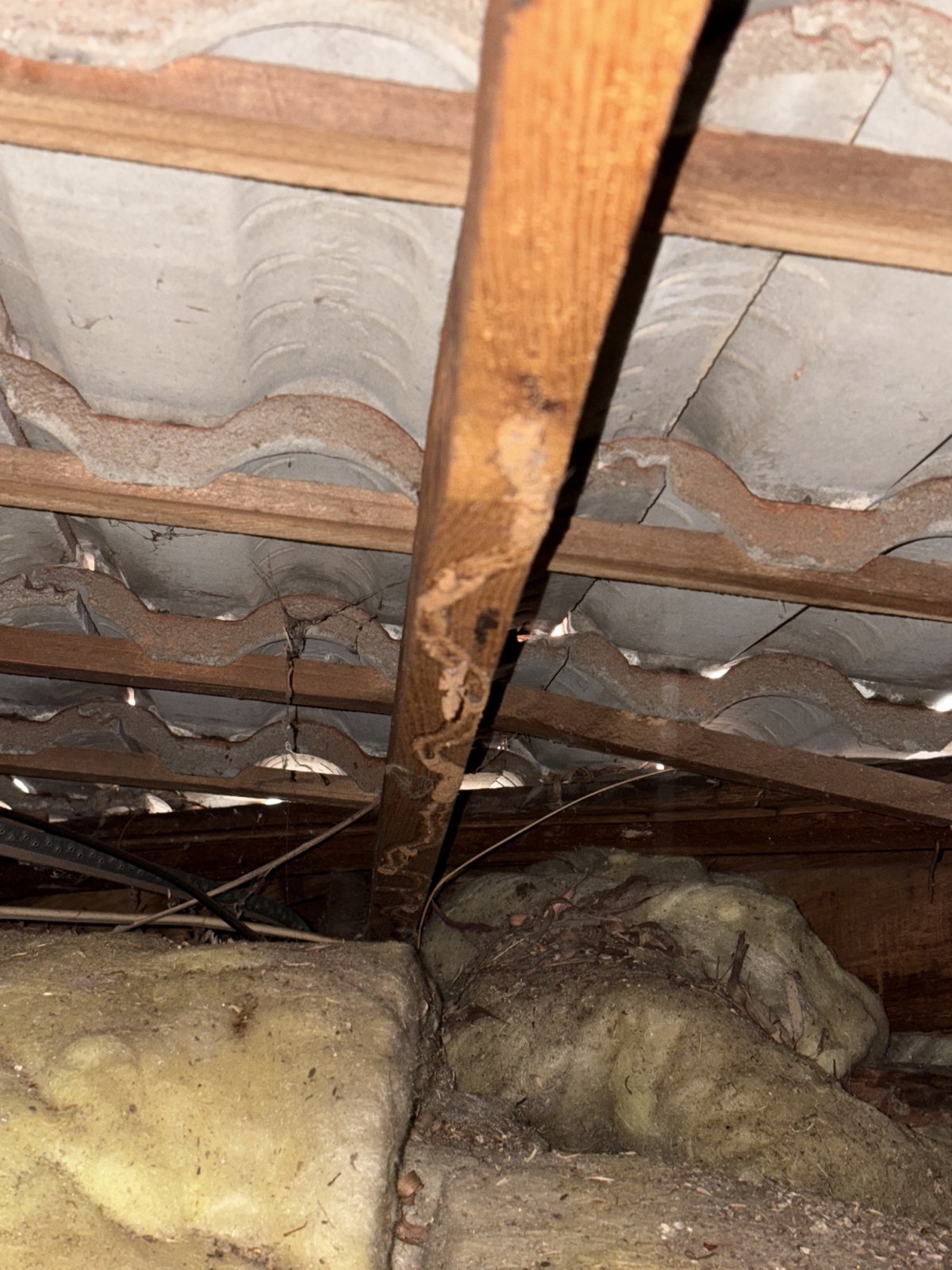
Mud tubes are pencil-width tunnels of soil, saliva, and timber that termites build to travel safely from the ground to your home, usually along foundation walls, brick piers, and subfloor timbers.
Why Older Homes Have More Mud Tubes
Older homes are more likely to have mud tubes because their construction creates more soil-to-timber contact points. Solid brick foundations, timber stumps, and low subfloor spaces give termites easy access, and renovations often seal off old access points, forcing new tubes through gaps the builder never anticipated.
Where to Look in an Older Home
Check the base of external walls, inside the subfloor, and around any timber that touches soil. In older properties, pay particular attention to:
- The junction where a verandah or deck meets the main house
- Behind rendered brickwork, where tubes can run undetected
- Around old plumbing penetrations and drainage points
Mud tubes are one of the clearest signs of a termite infestation, but easy to miss because they blend into brick and concrete. A torch and a slow walk around the perimeter will reveal most of them.
Active vs Abandoned Tubes
Not every mud tube means an active infestation. Termites abandon tubes when they find a better food source or when conditions change. To tell the difference:
- Active tubes are moist, intact, and have live termites inside when you break a small section open. You may also see termites repairing the breach within hours.
- Abandoned tubes are dry, brittle, and crumble easily. They may have no termites inside and no recent repair activity.
Even abandoned tubes matter: they show termites have accessed your home before, and the conditions that allowed it may still exist. Check nearby timber for hollow sections and book an inspection to rule out a new colony.
Do not spray mud tubes with insecticide. It kills the termites you can see and scatters the rest, making it harder for an inspector to trace the colony back to its nest.
Mud Tubes vs Other Lookalikes
Mud tubes can be confused with other features in older homes. How to tell them apart:
- Cracked mortar or render: These are dry, crumbly, and part of the wall itself. Mud tubes sit on top of the surface and can be scraped away.
- Spider webs or debris: These are loose and fibrous. Mud tubes are solid, earthy, and have a distinct tunnel shape.
- Old plumbing or conduit: These are rigid and man-made. Mud tubes are soft enough to break with a screwdriver.
If unsure, photograph it and send it to a qualified inspector, misidentifying a mud tube delays treatment and gives the colony more time to spread.
Sign 3: Discarded Wings and Termite Swarmers
Discarded wings near windows and doors mean termites have swarmed and started new colonies. Swarmers are winged termites that leave the nest to mate, then drop their wings once they find a new site.
Look for:
- Piles of translucent wings on window sills
- Wings near door frames and skirting boards
- Small dark insects crawling near light sources
Finding wings does not always mean the colony is inside your home, but it does mean termites are active nearby. If swarmers emerge from your own walls, the infestation is established and needs urgent treatment.
Sign 4: Frass, Droppings, and Tiny Holes in Timber
Frass is the droppings and debris drywood termites push out of small holes in timber.
Run your finger along exposed beams and check for gritty dust. If you find frass, tap the timber nearby and look for hollow sections. Frass confirms activity, not just old damage, which makes it one of the more reliable signs of a termite infestation.
Frass falls straight down. Place a sheet of white paper under a suspect beam for a few days. Fresh piles on the paper mean the colony is still active.
Sign 5: Bubbling, Blistering, or Peeling Paint
Bubbling, blistering, or peeling paint often signals termites feeding just under the surface. As termites eat the timber, they leave moisture and waste behind, pushing the paint away from the wood, it looks like water damage but has no obvious water source. Water damage usually shows staining, mould, or a clear leak above; termite damage shows paint that bubbles or peels with hollow, papery timber underneath.
Sign 6: Cracks in Walls and Ceilings
Cracks in walls and ceilings can point to termites weakening the structure behind the surface. As termites eat through timber framing, the wall loses support and the plaster or render cracks, often along cornices, above door frames, and near ceiling edges.
Why Cracks Are Harder to Read in Older Homes
Older homes crack for many reasons. Foundation settling, seasonal moisture changes, historic renovations, and original plaster deterioration all produce cracks that look similar to termite damage. This is the single biggest reason termite damage goes unnoticed in older properties: homeowners assume every crack is just part of living in an old house. A crack above a door frame might be settling, or it might mean termites have eaten the lintel, without checking the timber behind the crack, you cannot tell the difference.
How to Tell Termite Cracks from Settling or Water Damage
Use this symptom-by-symptom comparison to interpret what you are seeing:
| Feature | Termite Damage | Settling or Aging | Water Damage |
|---|---|---|---|
| Crack shape | Jagged, follows timber lines | Straight, often diagonal | Irregular, often with staining |
| Crack growth | Sudden, widens over weeks | Slow, stable for years | Appears after leaks or storms |
| Timber nearby | Hollow, soft, or crumbly | Solid, may be dry | Soft, damp, or stained |
| Paint condition | Bubbles or peels with hollow timber underneath | May crack but timber is sound | Blisters, stains, or mould present |
| Other signs | Mud tubes, frass, or discarded wings nearby | None | Damp smell, visible leak, or mould |
If a crack is new and growing, have it inspected before you patch it. Filling a crack hides the symptom while the cause keeps working.
Cracks That Deserve Urgent Attention
These crack patterns are more likely to indicate structural timber damage and warrant prompt professional assessment:
- Cracks that appear suddenly and widen over weeks
- Cracks near skirting boards or cornices
- Cracks paired with soft or hollow timber nearby
Hidden Cracks in Inaccessible Areas
Some of the most serious termite damage hides behind finishes and in areas you cannot easily see. In older homes, check these concealed locations safely:
- Behind loose skirting boards or architraves
- Inside roof spaces, especially where timber meets brickwork
- Under subfloors, around bearers and joists
If you find a crack in an inaccessible area, do not disturb it. Document the location with photos and arrange a qualified inspection to confirm whether it is cosmetic or a sign of active termite activity.
Take dated photos of any crack you find. If it widens over the next few weeks, you have clear evidence to show your inspector.
What to Do Next
If you suspect termite damage behind a crack, do not patch or spray it. Note the location, take photos, and book a professional termite inspection to assess the extent of any damage and whether treatment is needed.
Sign 7: Buckling Floors, Warped Frames, and Stiff Windows
Buckling floors, warped frames, and stiff windows are late-stage signs of hidden termite damage. By the time floors lift or doors stop closing, the structural timber has usually lost real strength, termites eat the bearers and joists that hold floors flat, so the boards above swell and buckle.
Watch for:
- Floors that spring or sag underfoot
- Doors and windows that suddenly stick
- Frames that look warped or out of square
These signs are especially relevant to older homes, where original timber carries the whole structure. If a door that closed smoothly last month now drags on the floor, act on it.
Hollow timber, mud tubes, and discarded wings are the three signs most likely to confirm an active infestation. Any one of them is enough to book a professional inspection.
What to Do After Finding a Suspected Sign
Do not disturb the area or spray it with a hardware-store product, store-bought sprays kill the termites you can see and scatter the rest, making a proper inspection harder.
A trained inspector confirms an infestation and assesses its extent by checking hidden damage behind finishes and in inaccessible areas.
Older-home prevention matters too. Fix leaks, keep soil away from timber, improve subfloor airflow, and book regular inspections, catching termite damage early is far cheaper than repairing structural timber later. For current pricing and available offers, check our special offers page or book an inspection online.
| Sign | Where to Check | Urgency |
|---|---|---|
| Hollow or soft timber | Skirting boards, door frames | High |
| Mud tubes | Foundation walls, subfloor | High |
| Discarded wings | Window sills, door frames | Medium |
| Frass and tiny holes | Exposed beams, roof void | Medium |
| Bubbling or peeling paint | Skirting boards, walls | Medium |
| Cracks in walls and ceilings | Cornices, ceiling edges | High |
| Buckling floors, stiff windows | Floors, frames | Urgent |
Termite damage in older homes rarely announces itself. It hides behind paint, under floors, and inside walls until the structure is already weakened.
Frequently Asked Questions
What are the first signs of termites in an older home?
Early signs often include hollow-sounding timber when tapped, mud tubes on foundations or walls, and discarded wings near windows or doors. You might also notice bubbling or peeling paint that looks like water damage. In older homes, these clues can be subtle because construction methods hide activity behind finishes. Regular inspections help catch termite damage before it spreads.
How can you tell if termites are inside a wall?
Tap along skirting boards and wall frames. A hollow or papery sound suggests tunnelling inside. Look for mud tubes, tiny holes, or frass pushing out of cracks. Swollen or buckling walls and paint that bubbles without a water source also point to hidden termite damage in walls. A professional inspection with a detection dog confirms activity behind finishes.
How do you distinguish termite damage from water damage?
Termite damage often shows clean, hollowed-out galleries with mud packing, while water damage causes staining, mould, and soft, crumbly timber. Termites leave frass and mud tubes; water damage leaves tide marks and a musty smell. If you are unsure, a pest inspector can tell the difference and recommend urgent treatment if termites are found.
Should you disturb timber if you suspect termites?
Avoid poking or breaking open timber. Disturbing termites can scatter them to new areas, making treatment harder. Instead, note the location and call a licensed pest controller. They can confirm activity and use targeted methods like baiting or the Sentricon system. Early professional action protects your home’s structure and saves on repair costs.