
Last Updated: October 23, 2026
Quick Summary
Integrating termite detection dogs into strata maintenance plans provides early detection of hidden termite colonies through a dog’s ability to detect volatile organic compounds released by live termites. This approach screens multi-unit buildings faster than visual inspection alone and identifies infestations in concealed areas within walls, floors and cavities that conventional methods miss.
- Strata buildings face higher termite risk because activity in one unit spreads through shared walls and common areas to adjoining properties.
- Preparation for a canine inspection requires confirming access scope, issuing resident notices 48 hours ahead, clearing working routes, and controlling competing odours.
- Risk-based inspection frequency ranges from every 2 to 3 years for low-risk buildings to annual inspections with targeted re-checks for high-risk properties.
- A dog alert requires professional verification before treatment; false positives are normal and verification prevents unnecessary treatment costs.
- Document all inspection dates, findings, verification outcomes and actions in the building’s pest management file to maintain consistency across committee terms.
Table of Contents
- Why Termite Detection Dogs Matter for Strata Buildings
- Understanding Strata Termite Inspection Responsibilities
- Preparing a Property for a Termite Dog Inspection
- Setting a Termite Inspection Schedule for Strata Buildings
- How Canine Detection Works: What Property Managers Need to Know
- Managing Termite Inspection Reports and Alerts
- Selecting a Licensed Pest Professional and Service Provider
- Frequently Asked Questions
Why Termite Detection Dogs Matter for Strata Buildings
Early detection is critical for strata properties. Termites can cause extensive damage before visible signs appear, and traditional detection methods often fall short in identifying infestations hidden deep within walls, floors, or other concealed areas.
This is where integrating termite detection dogs into strata maintenance plans becomes essential. Specially trained canines offer unmatched precision, speed, and reliability in identifying termite activity that conventional inspections might miss.
A trained detection dog screens a building far faster than visual inspection alone. Its nose detects volatile organic compounds released by live termites, even when the colony is hidden deep inside structural elements, invaluable for strata buildings with multiple units, shared walls, and concealed cavities.
Strata buildings face higher termite risk than single homes because termite activity in one unit can spread to adjoining properties through shared walls and common areas. Early detection in one location prevents colony establishment across the entire building.
Understanding Strata Termite Inspection Responsibilities
Termite inspection responsibility in strata buildings depends on the governance structure and by-laws. Typically, the body corporate or owners corporation holds responsibility for common property, including shared walls, roof cavities, and structural elements.
Individual lot owners usually manage pest control within their own units. But because termites travel through shared structures, responsibility often overlaps, a coordination challenge that integrating termite detection dogs into strata maintenance plans helps resolve.
When a termite detection dog identifies activity in common property, the body corporate must arrange treatment and notify affected lot owners. When activity appears in a private lot, the individual owner bears responsibility but should notify the strata manager immediately to prevent spread.
Failing to act on termite detection results in common property can expose the body corporate to liability claims from lot owners whose properties suffer damage. Document all inspection findings and actions taken in writing.
Clear communication between the strata manager, body corporate, lot owners, and pest professionals is essential. A written pest management policy outlining who inspects what, how results are shared, and who pays for treatment helps.
Preparing a Property for a Termite Dog Inspection
Preparation for a strata building is a coordination exercise, not just a tidy-up. How to Prepare Your Home for a Termite Inspection outlines practical steps to ready your property before the handler arrives.
Step 3: Clear the working routes. The dog works best along continuous surfaces, so clear pathways to subfloor hatches, roof access, wall voids and service penetrations. Practical tasks include:
- Unlocking and clearing subfloor access hatches and roof space entries
- Removing stored items from under stairs, in common cupboards and along shared walls
- Moving furniture away from walls in accessible common areas
- Identifying locked rooms, plant rooms and restricted areas in advance and confirming who holds keys
- Confirming safe lighting and safe footing in subfloors and roof cavities
Step 4: Control competing odours. Ask residents and cleaners not to apply pesticides, strong disinfectants or heavily scented cleaning products in the 24 to 48 hours before the inspection.
Step 5: Brief the on-site contact. Nominate a building contact who can meet the handler, provide keys, explain site hazards and reach the strata manager if an access issue arises.
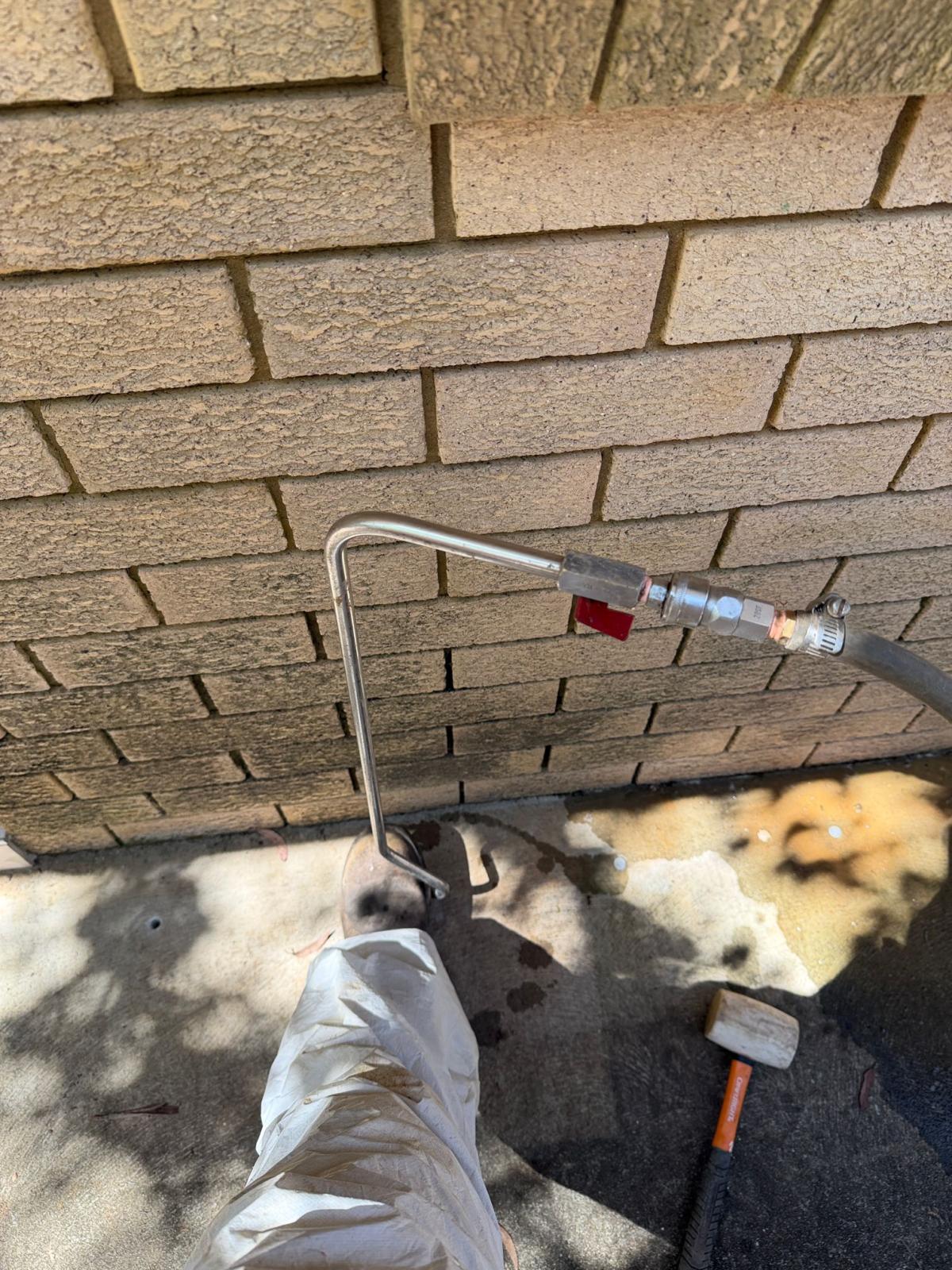
In a strata building, preparation is mostly about approvals, notices and access. A clear access scope agreed before the visit lets the dog cover more of the building and produces a report that stands up in the maintenance record.
Setting a Termite Inspection Schedule for Strata Buildings
A schedule is only useful if the committee can defend it. Build the cadence from the building’s risk profile, inspection history, and maintenance calendar, then record the rationale so future committees see why the frequency was chosen.
Risk-based frequency. Use a simple tiering approach and review it each year:
- Low risk: newer construction, low termite pressure, no prior activity. A common pattern is inspection every 2 to 3 years.
- Moderate risk: some timber framing, mature landscaping, proximity to bushland or known termite populations. Annual inspection is common.
- High risk: prior termite activity, moisture or drainage problems, older construction with less termite-resistant materials, or repeated alerts. Annual inspection with targeted re-checks of alert locations is common; some committees add a second screen in the warmer months.
Seasonal timing. In many parts of Australia, termite activity increases in the warmer months.
Sample annual calendar. A workable pattern for a moderate-risk building is:
- Late summer: confirm scope and access with the strata manager; issue resident notices.
- Autumn: canine screen of common property and any consented lots; receive report; verify alerts.
- Winter: complete any recommended treatment or remediation; update the pest management file.
- Spring: targeted re-check of prior alert locations and high-risk areas; review the cadence for the next year.
Triggers for an out-of-cycle inspection. Don’t wait for the calendar when a lot owner reports termite damage or mud tubes, a renovation disturbs timber or increases moisture, a known alert location hasn’t been verified, or a neighbouring property reports activity.
Record the schedule. Document the chosen frequency, the risk factors behind it, each inspection date, findings, verification outcomes and actions taken.
You can find more detailed guidance on pest control scheduling for strata properties to help plan your annual maintenance calendar.
Committees change, but buildings do not. A one-page schedule with the risk rationale, the calendar and the out-of-cycle triggers keeps the program consistent across committee terms and makes budgeting and approvals easier.
Inspection frequency depends on the building’s termite risk profile and should be reviewed annually.
| Risk Level | Inspection Frequency | Key Factors |
|---|---|---|
| Low risk | Every 2 to 3 years | Newer construction, low termite pressure, no prior activity |
| Moderate risk | Annual inspection | Some timber framing, mature landscaping, proximity to bushland |
| High risk | Annual with targeted re-checks | Prior activity, moisture problems, older construction, repeated alerts |
How Canine Detection Works: What Property Managers Need to Know
A trained termite detection dog identifies termites by scent.
Active colonies produce specific chemical signatures.
The dog detects termites through walls, under floors, and inside cavities where humans cannot see, making canine detection far more effective than visual inspection alone for concealed infestations.
For strata buildings, this is transformative: a single dog can screen a multi-unit building in a few hours, checking common areas and accessible private spaces.
Research on canine olfactory capabilities and detection accuracy shows that properly trained detection dogs achieve reliability rates comparable to laboratory analysis.
You can learn more about how termite dog inspections work and what to expect during a professional inspection appointment.
A detection dog alert does not automatically confirm termites are present. The handler and pest professional work together to verify findings. This verification step prevents unnecessary treatment and ensures resources target genuine infestations.
Managing Termite Inspection Reports and Alerts
After a termite detection dog inspection, the handler provides a detailed report documenting the date and time, areas inspected and inaccessible, alert locations, follow-up or treatment recommendations, and photos or diagrams of alert locations.
For strata buildings, the report should go to the strata manager and body corporate. The manager then distributes relevant information to affected lot owners and arranges any necessary follow-up.
Interpreting Detection Results
A positive alert means the dog detected termite scent in that location, but the alert alone does not confirm an active infestation. The pest professional must verify the finding.
Verification might involve:
- Visual inspection of the alerted area
- Moisture readings to assess conditions
- Listening devices to detect termite activity
- Taking samples for laboratory analysis
- Installing monitoring devices to track activity over time
If verification confirms termites, the pest professional recommends treatment. For common property infestations, the body corporate arranges and funds treatment. For private lot infestations, the owner arranges treatment but should notify the strata manager. When treatment is needed, Termite Control services can be arranged to address confirmed infestations promptly and protect the building’s structure.
Handling False Positives and Verification Inspections
Dogs occasionally alert where termites are not present, for example, residual scent from past activity or a mistaken scent.
False positives are a normal part of the process, not a failure of canine detection. That’s why verification by a qualified pest professional is essential to confirm whether an alert represents a genuine, active infestation.
When verification shows no termites, no treatment is needed. The alert still directed attention to that area and ruled out a potential problem, saving the body corporate unnecessary treatment costs and resident disruption.
Document all alerts and verification results in the building’s pest management file. Over time, patterns emerge. Repeated alerts in the same area might indicate a persistent moisture issue or a location where termites are likely to return.
Never assume a dog alert is a false positive without professional verification. Conversely, do not panic and approve treatment immediately. Let the pest professional investigate and confirm before proceeding with any chemical application.
Selecting a Licensed Pest Professional and Service Provider
Choosing the right pest professional is critical.
Ask potential providers about their termite detection dog credentials. Has the handler completed formal training? Is the dog regularly assessed for accuracy? Does the provider stand behind their findings with follow-up verification?
Experience matters. A professional who has worked with multiple strata buildings understands the coordination challenges, knows how to communicate findings to residents, and can advise on treatment options that minimise disruption.
Request references from other strata buildings the provider has served. Ask about their experience with the specific types of termites common in your area and whether they use additional detection methods alongside canine inspection.
For integrating termite detection dogs into strata maintenance plans, Redback Pest Control Sydney brings over 30 years of experience managing pest control across Sydney, Campbelltown, Parramatta, Blacktown, Liverpool, and all Western Sydney. You can Book On Line to schedule an inspection or check our Special Offers for current promotions on strata pest management services.
Termite infestations develop silently and spread quickly through strata buildings.
Frequently Asked Questions
How often should a strata property be inspected for termites using detection dogs?
Inspection frequency depends on your building’s age, location, and previous termite history. Older buildings or those in high-risk areas typically benefit from annual inspections. Newer buildings or those with proven termite barriers may require inspections every 2-3 years. A licensed pest professional can assess your property’s risk profile and recommend an appropriate schedule for your strata maintenance plan.
What should a strata manager do before a termite detection dog inspection?
Ensure clear access to all common property areas, including roof voids, subfloor spaces, and enclosed areas where termite activity might occur. Notify residents of the inspection date and any access requirements to individual lots. Remove clutter or obstacles that could slow the dog handler’s movement. Brief the strata committee on what to expect during the inspection so they understand the process and can answer resident questions confidently.
Who is responsible for arranging termite inspections in a strata scheme?
The body corporate or strata committee typically holds responsibility for common property pest management, including termite inspections. Individual lot owners are usually responsible for their own units unless the scheme’s by-laws specify otherwise. Clarify these responsibilities in writing before engaging a service provider to avoid disputes or gaps in coverage.
What happens if a detection dog indicates possible termite activity during an inspection?
A positive alert triggers a verification inspection by a licensed pest professional who will conduct a detailed visual examination and may use additional diagnostic tools to confirm termite presence. If termites are confirmed, the strata committee receives a formal termite inspection report recommending treatment options and ongoing monitoring. False positives can occur, so verification before committing to treatment is essential practice.
