
Table of Contents
- Professional Termite Inspection vs DIY Inspection: The Core Differences
- What Each Approach Actually Covers
- DIY Termite Inspection Checklist: What You Can Realistically Do
- The Professional Termite Inspection Process, Step by Step
- Termite Detection Dog Inspection: How Scent Beats Eyesight
- How Often to Inspect for Termites in Your Property
- Property Purchase, Insurance and Warranty: Why the Choice Matters
- Which Option Fits Your Situation? A Decision Framework
- Frequently Asked Questions
Last Updated: October 8, 2026
Professional Termite Inspection vs DIY Inspection: The Core Differences
A professional termite inspection is a structured assessment carried out by a trained technician using detection tools and reporting standards, while a DIY inspection is a visual check a property owner performs on their own.
Termites cause damage long before most owners notice it. A homeowner walking the perimeter might spot a mud tube on a foundation wall.
Below, we break down exactly what each approach covers, what a termite inspection report includes, and how to decide which option fits your property.
What Each Approach Actually Covers
A DIY inspection covers surface-level signs: visible mud tubes, discarded wings near windows, frass, and timber that sounds hollow when tapped. It is a reasonable first sweep, and every owner should know these signs.
A professional inspection goes further. A technician checks concealed areas such as the roof void, subfloor, and crawl space, then uses detection tools to test what the eye cannot verify. The scope difference is the whole argument.
Side-by-Side: Scope, Accuracy, Time and Limitations
| Factor | DIY Inspection | Professional Inspection |
|---|---|---|
| Who performs it | Property owner | Trained, insured technician |
| Typical time | 20-45 minutes | 1-2 hours depending on access and size |
| Areas covered | Accessible, visible zones only | Roof void, subfloor, crawl space, interior wet areas, exterior perimeter |
| Detection methods | Torch, screwdriver, visual check | Visual check plus moisture meter, thermal imaging, acoustic detection, and where available a trained termite detection dog |
| What it can confirm | Visible signs and conducive conditions | Visible signs, concealed activity, moisture and risk factors, documented findings |
| What it cannot confirm | Activity behind linings, inside wall cavities, under slabs | Areas that are physically inaccessible or sealed at the time of inspection |
| Output | Personal notes | Written inspection report with findings, risk areas and recommendations |
| Best suited to | Routine monitoring between professional visits | Property purchase, prior activity, warranty requirements, disputes |
The Accuracy Gap in Plain Terms
A DIY check answers one question: can I see anything unusual today? A professional inspection answers a different one: is there evidence of termite activity, and what conditions on this property make it likely?
That second question needs access and interpretation. A homeowner cannot safely enter a low subfloor, cannot read a thermal anomaly, and cannot tell the difference between old damage and active activity without training. Most professional pest control practitioners find that the majority of confirmed infestations are first detected in areas a homeowner cannot reach, behind wall linings, under flooring, or inside the roof void.
Where DIY Genuinely Wins
DIY is not pointless. It wins on frequency and familiarity. You can check your property monthly, and you will notice changes a technician visiting once a year cannot. Used as a monitoring habit between professional inspections, it adds real value. Used as a substitute, it leaves the concealed half of your property unchecked.
DIY Termite Inspection Checklist: What You Can Realistically Do
A DIY termite inspection is a monthly or quarterly visual check of high-risk zones around your property. Done consistently, it helps you notice changes early. It cannot confirm whether a colony is active inside a wall.
Work through this checklist with a torch and a screwdriver:
- Check the foundation edge for mud tubes, then break one open to see if it is active
- Look for discarded wings on window sills and near light fittings
- Tap exposed timber in the subfloor for a hollow sound
- Check for wood-to-soil contact around posts and garden beds
- Inspect the roof void for damaged or sagging timbers
- Look under the house for moisture, water leaks, or damp soil
- Check fences, sleepers, and timber retaining walls
- Note any cracking or bubbling paint on timber surfaces
Tools That Help, and What They Cannot Confirm
A pinless moisture meter or a professional-grade moisture encounter identifies damp timber, which is the condition termites need. A thermal camera can reveal temperature anomalies behind wall linings. Both are genuinely useful.
Neither confirms termites. A moisture meter reads water, not insects. Thermal images can be misread without training. These tools flag where to look, and a qualified technician interprets what the reading means.
The Professional Termite Inspection Process, Step by Step
The professional termite inspection process follows a defined sequence, and each stage builds on the last. It typically starts with a conversation about the property’s history, then moves to the physical check.
- Property history review. Previous treatments, known activity, and building alterations are discussed.
- Exterior perimeter check. Foundation edges, weep holes, and timber-to-soil contact points are examined.
- Subfloor and crawl space. Accessible areas are checked for mud tubes, moisture, and damaged bearers.
- Roof void and eaves. Concealed timbers and insulation are inspected for activity.
- Interior sweep. Skirting boards, door frames, and wet areas are checked for signs.
- Detection tools. Moisture meters, thermal imaging, and acoustic detection supplement the visual check.
- Reporting. Findings, risk areas, and recommendations are documented in writing.
Detection Methods and What Each One Can and Cannot Do
No single tool detects termites. Each one narrows the search, and the technician interprets the combined picture. Understanding the limits is what separates a useful inspection from a false sense of security.
- Visual inspection. The foundation of every assessment. Finds mud tubes, frass, damaged timber, and conducive conditions. Cannot see behind wall linings or under slabs.
- Moisture meters. Pinless meters identify damp timber, which is the condition termites need. They read water, not insects, so a positive reading means further investigation, not confirmation.
- Thermal imaging. Thermal imaging cameras reveal temperature anomalies behind linings, often caused by moisture or termite activity. Anomalies have many causes, and misreading them without training is common.
- Acoustic detection. Sensors pick up the sound of termites feeding inside timber. Effective in the right conditions, but background noise and colony size affect reliability.
- Trained termite detection dogs. A canine locates live termite activity by scent, often before any visual sign appears, including behind wall linings and under flooring. The dog narrows the search to a specific spot; the technician confirms and documents it.
The honest position is that tools support detection; they do not guarantee it. Any provider claiming a tool finds every colony is overselling.
What a Professional Inspection Report Includes
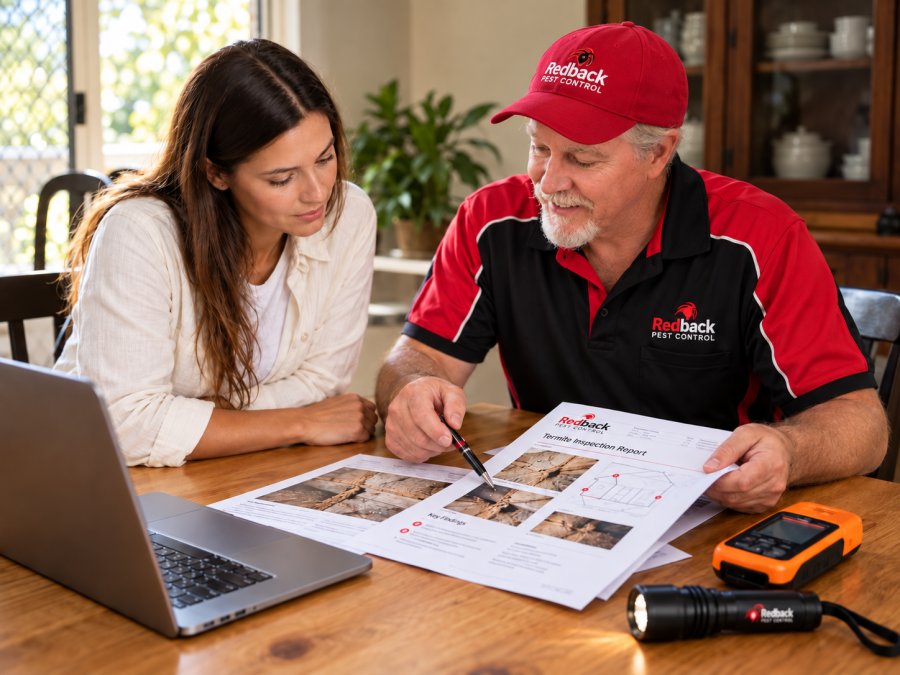
A professional inspection report documents the areas inspected, any termite activity or damage found, conducive conditions, and recommendations. It also states any areas that could not be accessed.
A typical report covers:
- The date of inspection and the scope of the assessment
- Areas inspected and the methods used
- Evidence of termite activity, past or present
- Damage found, with location notes
- Conducive conditions such as moisture, timber-to-soil contact, or poor drainage
- Areas that could not be accessed and why
- Risk rating and recommended next steps
- Any treatment or monitoring recommendations
That inaccessible-areas point matters more than most owners realise. A report that lists an inaccessible subfloor is telling you the inspection has limits, and any honest provider will say so. If you are buying a property, this document is what your conveyancer and insurer will ask for.
A professional inspection is not just a more thorough look, it is a documented, method-backed assessment with stated limits. That documentation is what gives it weight with buyers, lenders, insurers and warranty providers, and it is the part a DIY check can never replicate.
Termite Detection Dog Inspection: How Scent Beats Eyesight
A termite detection dog inspection uses a trained canine to locate live termite activity by scent, often before any visual sign appears.
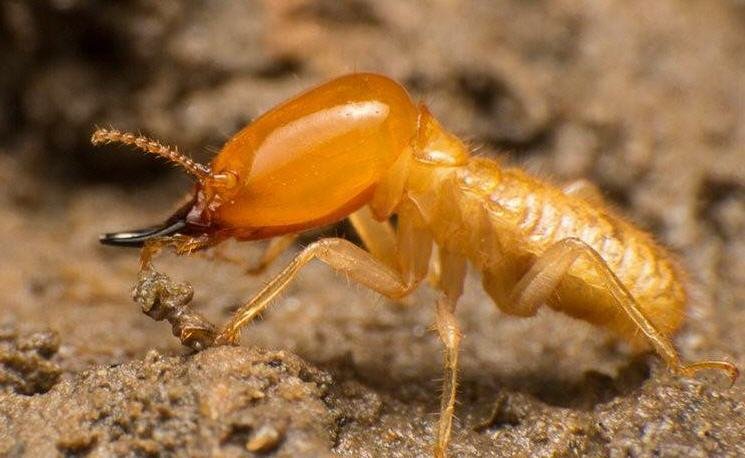
Our own detection dog, Andy, works alongside our technicians on inspections. The dog narrows the search to a specific spot, and the technician confirms and documents it. Scent finds the colony; the report proves it.
How Often to Inspect for Termites in Your Property
The standard recommendation is an inspection at least once a year, with more frequent checks in high-risk properties. High-risk means previous activity, high moisture, or extensive timber-to-soil contact.
DIY checks can run monthly between professional visits. If you have had termites treated before, annual is the floor, not the ceiling. Termites can re-enter a treated zone, and a warranty claim usually depends on documented, ongoing inspections.
Property Purchase, Insurance and Warranty: Why the Choice Matters
A building and pest inspection before purchase is where the choice carries the most weight. A DIY check carries no weight with a lender, insurer, or seller. A professional report does.
Warranty terms typically require inspections at set intervals. Miss one, and a claim can be refused. Insurance and dispute outcomes also lean on written evidence, not a buyer’s memory of what they saw.
Which Option Fits Your Situation? A Decision Framework
Use this framework to choose:
- Buying a property: Professional inspection, every time. A DIY check cannot support a negotiation.
- Previous termite activity: Professional inspection plus a prevention plan.
- Routine peace of mind: DIY checks monthly, professional inspection annually.
- Commercial or managed sites: Professional inspections on a scheduled program.
If you would rather leave the concealed half of your property to the professionals, our Termite Control service covers inspection and treatment, and you can check current Special Offers before you book.
If you break open a mud tube and find live termites, do not spray it. Disturbing the colony without treatment can scatter it into new areas of the home. Note the location and call a technician.
A DIY inspection that finds nothing is not proof your property is clear. Termites can work inside a wall for years without a single visible sign. Treat a clean DIY check as a prompt to book a professional inspection, not a reason to skip it.
Frequently Asked Questions
Can I inspect my home for termites myself?
You can check accessible areas for warning signs like mud tubes, discarded wings, frass or hollow-sounding timber, and a DIY termite inspection checklist makes this easier. What you cannot do is confirm whether an infestation is active, how far it has spread, or whether concealed areas such as wall cavities and roof voids are affected. Use DIY checks as a monitoring habit between professional termite inspections, not as a replacement.
What does a professional termite inspection check that a DIY check misses?
A professional termite inspection process covers roof voids, subfloors, foundations, crawl spaces, fence lines and other concealed areas that most homeowners cannot safely access. Inspectors use moisture meters, thermal imaging and acoustic detection, and some teams use a termite detection dog inspection to pick up scent in wall cavities and floors. The result is a written inspection report with findings, risk factors and treatment recommendations.
Can termites be present without visible signs?
Yes. Subterranean termites often travel through mud tubes inside walls and under floors, while drywood termites can hollow out timber from the inside, leaving a sound surface. By the time swarmers or discarded wings appear, a colony may have been active for years. This is why early detection matters: regular professional termite inspections find activity before structural damage becomes obvious or expensive to repair.
How often should a home be inspected for termites?
Most properties benefit from a professional termite inspection at least once a year. Inspect more often if your home has previous termite activity, wood-to-soil contact, high moisture or water leaks, or sits in a known termite-prone area. Properties going to market usually need a building and pest inspection before purchase. Between professional visits, run through a DIY termite inspection checklist monthly to catch new mud tubes or swarmers early.
What should I do if I find signs of termites?
Do not disturb the area or spray insecticide, which can scatter the colony and make treatment harder. Photograph what you found, note the location, and book a professional inspection promptly. A pest technician can confirm whether the activity is active, identify the species, and recommend a termite treatment such as baiting systems or a chemical barrier. Early detection usually means less structural damage and simpler repairs.
Termites do not announce themselves, and a visual check will not catch what is hidden behind a wall. Redback Pest Control Sydney has protected homes and businesses across Western Sydney for over 30 years, with family-safe treatments, specialised termite dog inspections, and the Sentricon® system guarding your timber. Get a free quote and book an inspection that actually confirms what is happening inside your property.