

Last Updated: October 26, 2026
Quick Summary
Standard home insurance policies in Australia exclude termite insurance for structural damage, treating it as preventable maintenance rather than a sudden event. Insurers draw a hard line between sudden damage, which may be covered, and gradual damage from termites, which rarely is. Check your policy’s exclusions and definitions carefully before assuming any cover applies.
- Pest and insect exclusions, gradual damage clauses and maintenance clauses typically remove termite cover.
- Search your policy PDF for terms like termite, pest, gradual, deterioration and maintenance.
- Insurers may cover resulting damage from a covered event while declining the termite portion.
- Leave damage in place and photograph everything before booking a professional inspection.
- In strata, the owners corporation usually handles common property and the lot owner handles inside their lot.
Table of Contents
- Is Termite Damage Covered by Home Insurance?
- Termite Damage Insurance Exclusions You Need to Understand
- Sudden Damage vs Gradual Damage: Why Insurers Draw the Line
- Signs of Structural Termite Damage Every Property Owner Should Know
- What to Do Immediately After Discovering Termite Damage
- Termite Inspection Report for Insurance Claim: Evidence That Matters
- Strata, Shared Property, and Who Pays for Repairs
- Book a Termite Inspection Before You Buy or Claim
- Frequently Asked Questions
Is Termite Damage Covered by Home Insurance?
No. In most standard home insurance policies, termite insurance is excluded for damage. Insurers treat it as preventable maintenance, not a sudden event. At Redback Pest Control Sydney, we get asked this constantly, and the honest answer is that termite insurance rarely covers the structural damage itself.
Here is the key distinction: termite damage is the result of gradual pest activity over months or years. Insurance is built to cover sudden, accidental events like fire, storm or impact.
So when a homeowner asks “is termite damage covered by home insurance,” the short answer is almost always no. The damage builds slowly and quietly. Insurers see that as a maintenance issue, not an accident.
That single distinction explains most claim rejections. Below, we break down how exclusions work, what to do when you find damage, and how to protect your property before it starts.
Termite Damage Insurance Exclusions You Need to Understand
Exclusions are the part of a policy most people never read until it matters. A policy exclusion is a clause that removes specific events or damage types from cover. For termite damage, three clauses usually do the work:
- Pest and insect exclusion: removes damage caused by termites, borers and similar pests
- Gradual damage clause: rules out damage that builds over time
- Maintenance clause: places inspection and upkeep on the property owner
The exact wording varies between insurers, so a blanket yes-or-no answer is unreliable. Instead, check your own policy or product disclosure statement (PDS) line by line. Here is a practical method:
- Search the PDF for keywords. Use your reader’s search function for “termite,” “pest,” “insect,” “gradual,” “deterioration,” “wear and tear,” and “maintenance.” Note every hit and read the full clause around it.
- Read the exclusions list in full. Insurers often group pests with other gradual or preventable events. The termite exclusion may sit under a broader heading rather than appearing as its own line.
- Check the definitions section. Words like “gradual damage,” “maintenance,” and “sudden and accidental” are defined terms. The definition controls how the exclusion applies.
- Look for limited exceptions. Some policies cover resulting damage from a covered event, for example, if a falling tree opens a wall and termites are then found, even though the infestation itself is excluded. Read any “we will cover” or “exception” wording carefully.
- Check the PDS and any supplementary documents. The PDS is the formal disclosure document and may contain exclusions or conditions not repeated in the shorter policy schedule.
Photograph or scan the relevant pages and keep them with your inspection report. If you later need to dispute a decision, you will have the exact wording to hand.
If the words “termites,” “pests,” “gradual deterioration,” and “wear and tear” appear in the exclusions list, termite damage is very likely not covered. But do not stop at the first hit, read the surrounding clause and any exceptions before you assume the answer is no.
Sudden Damage vs Gradual Damage: Why Insurers Draw the Line
Insurance draws a hard line between sudden and gradual damage. A covered event is something abrupt and unforeseen, like a falling tree or a burst pipe. Gradual damage accumulates slowly and is usually excluded. Termite activity falls firmly on the gradual side, a colony can work through timber for years before you notice anything.
Here is how the two compare:
| Damage Type | Typical Cause | Usually Covered? |
|---|---|---|
| Sudden damage | Storm, impact, burst pipe | Yes, if listed |
| Accidental damage | Spills, breakage | Optional add-on |
| Gradual damage | Termites, rot, wear | Rarely |
| Preventable damage | Missed maintenance | No |
The logic is straightforward. Insurers argue that regular inspections would have caught the problem early, making the damage preventable, and preventable damage is the owner’s responsibility.
Distinguishing the infestation from the resulting damage
A point competitors often miss: the infestation itself and any resulting damage may be assessed differently. Consider these scenarios:
- Termites found during a routine inspection. The infestation is gradual and excluded. Any structural damage is treated as part of the same excluded event.
- A burst pipe soaks a wall, and termites are later found in the damp timber. The water damage may be covered as a sudden event, while the termite damage remains excluded. The insurer will separate the two causes and assess each on its own wording.
- A storm removes roof tiles, rain enters, and rot or termites follow. The storm damage may be covered; the subsequent pest or rot damage usually is not.
Do not assume that because one part of a loss is covered, the termite damage will be too. Insurers commonly apportion a claim by cause, and the termite portion is typically declined.
If you believe a covered event contributed to the damage, document the sequence of events clearly and ask your insurer to explain how it has apportioned the claim. That written explanation is useful if you later seek an internal review.
Signs of Structural Termite Damage Every Property Owner Should Know
Spotting the signs early is your best defence. Structural termite damage often hides behind walls and under floors, but it leaves clues.
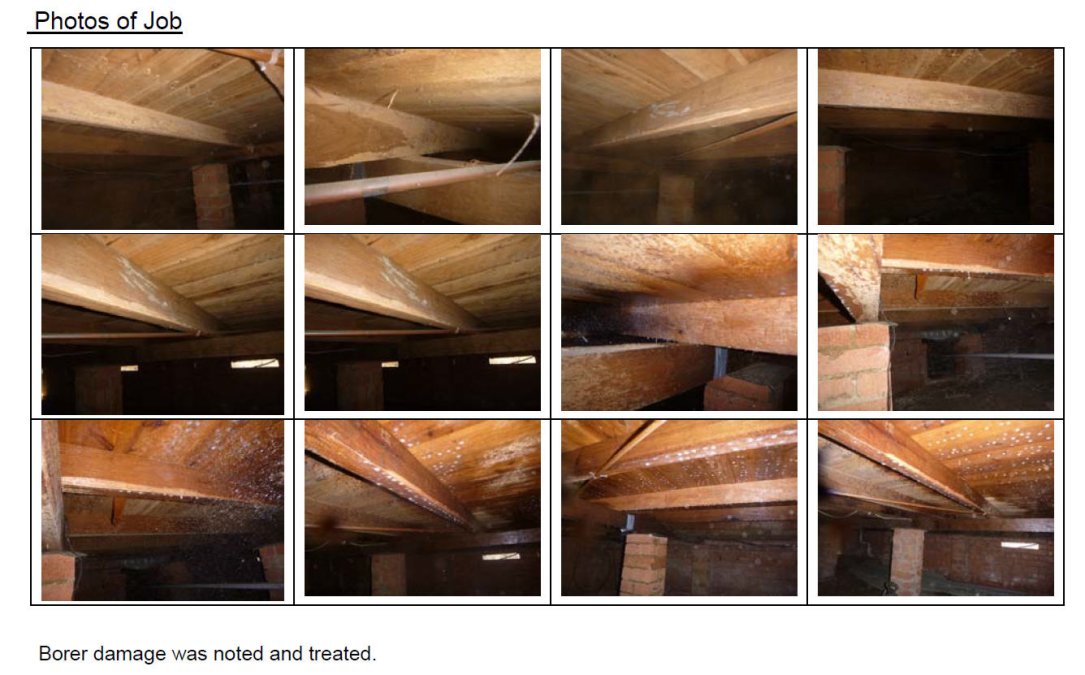
Watch for these signs of structural termite damage:
- Mud tubes on walls, piers or foundations
- Bubbling or cracked paint on timber
- Hollow-sounding wood when tapped
- Sagging floors or doors that no longer close
- Frass, which is termite droppings, near timber
- Tight-fitting doors and windows from warped frames
If you see any of these, act quickly. For a deeper visual guide to spotting hidden damage, read our breakdown of the 7 signs of hidden termite damage in older homes.
What to Do Immediately After Discovering Termite Damage
Don’t panic, and don’t start ripping out walls. The first steps protect both your safety and any future claim.
- Leave the damage in place. Do not disturb active termites or remove timber before an inspection.
- Photograph everything. Take dated photos of mud tubes, damage and any frass.
- Book a professional inspection. A licensed inspector documents the extent and type of activity.
- Call your insurer. Ask whether any part of the damage is covered, and log the claim reference.
- Keep all receipts. Any emergency repairs and inspection costs should be documented.
A common mistake is spraying a hardware-store product before an inspection. That can scatter the colony and destroy the evidence you need. Let a professional assess it first.
Termite Inspection Report for Insurance Claim: Evidence That Matters
A termite inspection report is a written record of what the inspector found, where the activity is, and how severe it is. For an insurance claim, it is the single most important document you will hold.
A strong report for a claim should include:
- The date and scope of the inspection
- Locations and photos of termite activity
- A damage assessment separating old damage from active activity
- The inspector’s licence details
- Recommendations for treatment and repair
Insurers rely on this report to decide whether any damage falls under a covered event. If you are submitting a report with a claim, our guide on how to read a termite inspection report for buyers walks through each section so nothing catches you out.
Keep the original. Send copies only.
Strata, Shared Property, and Who Pays for Repairs
In strata, termite damage gets complicated fast. Responsibility usually splits between the owners corporation and the lot owner.
As a general rule:
- The owners corporation handles common property, such as structural timbers and shared walls
- The lot owner handles everything inside their own lot
The split depends on your strata scheme’s by-laws and what counts as common property. Disputes are common, so check the by-laws before assuming who pays.
For a fuller walkthrough of shared-property protection, see our guide to termite protection for strata. It covers how responsibilities typically work and where to start.
Book a Termite Inspection Before You Buy or Claim
The best time to deal with termites is before they cost you. A professional inspection gives you documented evidence, whether you are buying, claiming or simply protecting what you own.
At Redback Pest Control Sydney, we bring over 30 years of experience to every job. Our specialised termite dog inspections, including our detection dog Andy, can pinpoint activity that visual checks miss. We also use the Sentricon® system to protect wooden structures, and our treatments are family-safe.
If you have found damage or want to check a property before you buy, book a termite inspection and tell us about your termite issue. We will build the termite control program you need.
Have more questions about coverage, prevention or next steps? Our termite questions page answers the ones we hear most.
Frequently Asked Questions
Does home insurance cover structural damage caused by termites?
In most Australian home insurance policies, termite damage is excluded. Insurers classify termite activity as gradual damage and preventable maintenance, not a sudden insured event. That means structural damage to timber, flooring, and building components caused by termites usually falls on the property owner. Check your product disclosure statement and policy wording for the exact exclusion clause, because wording varies between insurers. If you are unsure, ask your insurer in writing before you rely on cover.
What are the first signs of termites in a house?
Early warning signs include mud tubes on walls or foundations, bubbling or cracked paint that looks like water damage, hollow-sounding timber when tapped, sagging floors or doors that suddenly stick, and frass (termite droppings) near timber. Flying termites or discarded wings after rain are another signal. Because termites hide behind walls and floors, visible signs often appear after damage is already significant. A professional termite inspection is the reliable way to confirm activity.
What should I do if I discover termite damage in my home?
Do not disturb the area or spray household insecticide, as this can scatter the colony and make treatment harder. Photograph and document what you find, then arrange a professional termite inspection to assess the extent of activity and damage. Contact your insurer to check your policy wording, even though cover is unlikely. Keep all reports, quotes, and receipts. Treatment and repairs should be planned with a licensed pest control professional who can advise on colony elimination and structural repair priorities.
Can I claim for termite damage if it was hidden behind a wall?
Hidden damage is still usually excluded. Insurers assess the cause, not just the visibility. Termite damage develops over months or years, so it fits the gradual damage exclusion regardless of whether you could see it. A claim may only succeed if you can show a specific, sudden insured event caused the damage and termites were secondary. Review your policy wording carefully and request the insurer’s decision in writing so you understand your dispute options.
Termites rarely announce themselves, and insurance rarely covers the result. The gap between the two is where prevention lives. Redback Pest Control Sydney can inspect, document and protect your property with specialised termite dog inspections, the Sentricon® system and family-safe treatments backed by over 30 years of experience. Get started with Redback Pest Control Sydney and protect your biggest asset before the damage starts.
