

Table of Contents
- What Drives Termite Inspection Cost
- Standard, Pre-Purchase and Combined Inspections Compared
- How Long Does a Termite Inspection Take
- What Your Termite Inspection Report Should Tell You
- Termite Inspection Frequency: How Often to Book
- Termite Detection Dog Inspection: What It Adds
- Inspection Versus Treatment: Where the Money Goes
- Conclusion
- Frequently Asked Questions
Last Updated: October 21, 2026
What Drives Termite Inspection Cost
Termite inspection cost depends on three things: property size, access, and the type of inspection you book.
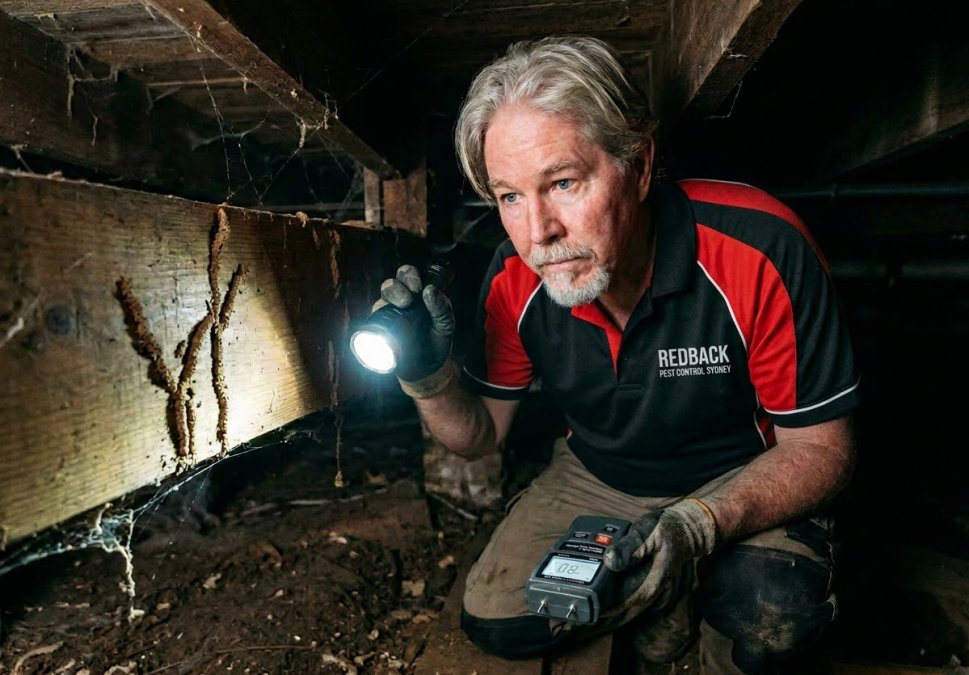
Two properties on the same street can attract very different fees. A small brick veneer home with open subfloor access takes far less time than a sprawling weatherboard house with a packed crawl space.
Here is the short version before we go deeper:
- Property size: more floor area means more inspection points
- Access: blocked subfloors and tight roof voids slow everything down
- Construction: slab, stumps, brick or timber all change the approach
- Scope: a standard check covers less ground than a pre-purchase inspection
A termite inspection is a visual assessment for signs of termite activity and conditions that attract termites. It is not a guarantee that no termites exist, which is why scope matters as much as the fee.
Property Size, Access and Construction
Floor area is the simplest driver. A larger property has more walls, more skirting, more fence lines and more outbuildings to check. That takes longer, and longer means more.
Access is the one most homeowners overlook.
Construction type matters too. A home on stumps with exposed bearers and joists is easier to inspect than a slab-on-ground build, where the inspector relies on edges, expansion joints and weep holes.
Inspection Type and Scope
The inspection type changes the fee more than anything else. A quick visual check is a different job from a full pre-purchase inspection with a written report.
Scope covers what the inspector examines and records. A standard inspection focuses on the main dwelling and accessible areas; a broader one adds fences, trees, sheds, garages and structures within the boundary.
Ask for the scope in writing before you book. A cheap quote that covers half the property is not cheaper. It just moves the risk onto you.
Difficult Access and Property Features That Add Cost
Headline prices often assume reasonable access. When access is restricted, inspectors may need more time, specialised equipment, or to note limitations that affect the report. Common triggers for a higher fee include:
- Subfloor clearance under 400mm, or a subfloor blocked by stored items, ducting or debris
- Roof voids that are cramped, low-pitched, or filled with insulation that must be moved aside
- Multiple extensions, outbuildings, garages or sheds that each need separate assessment
- Dense landscaping, raised garden beds or trellis against the walls
- Restricted access to fence lines, retaining walls or property boundaries
These factors do not always appear in an online quote. A reputable inspector will ask about them before confirming a price, or note them as exclusions. If unsure, send photos of your subfloor access and roof void when requesting a quote to avoid surprises on the day.
How Scope Changes the Fee
A standard inspection covers the main dwelling and accessible areas. A pre-purchase inspection covers the full accessible property and includes a written report suitable for contract negotiations.
The fee difference reflects time, report detail and liability. A pre-purchase report carries more responsibility because it may be used to negotiate price or withdraw from a contract.
When comparing quotes, ask what is included and excluded. A low fee that excludes the subfloor, roof void or outbuildings is not comparable to one that covers them.
Standard, Pre-Purchase and Combined Inspections Compared
The inspection you choose should match your reason for booking. A homeowner managing risk needs something different from a buyer who has just signed a contract.
- Standard inspection: a routine check of the dwelling and accessible areas, usually booked by owners for peace of mind or to meet a treatment warranty condition
- Pre-purchase inspection: a detailed assessment before you commit to a property, with a written report you can act on during the cooling-off period
- Combined building and pest inspection: a building inspector and a termite inspector assess the property, often on the same visit, so you get one coordinated picture of structural and termite issues
The combined option suits most buyers. Building faults and termite damage often show up in the same places, and lining up both reports saves time and avoids gaps.
Pre-purchase work carries more responsibility, so it costs more than a routine check. The report has to stand up if you later negotiate on price or walk away.
| Inspection Type | Best For | Scope | Relative Cost |
|---|---|---|---|
| Standard | Homeowners, warranty conditions | Dwelling and accessible areas | Lowest |
| Pre-purchase | Property buyers | Full accessible property, written report | Higher |
| Combined building and pest | Buyers wanting one coordinated view | Structure plus termite assessment | Highest |
What Is Included and Excluded in Each Inspection Type
One of the biggest sources of confusion is what each inspection actually covers. Here is a practical breakdown to help you compare quotes on scope, not just price.
Standard inspection, typically included:
- Visual check of the main dwelling, including interior rooms, skirting boards, cornices and wall linings where accessible
- Subfloor and roof void where safe access exists
- Fences, retaining walls and landscaping within the immediate boundary
- Written report noting any evidence of termite activity, damage or risk factors
Standard inspection, typically excluded:
- Inaccessible areas (e.g. subfloor clearance under 400mm, blocked roof voids)
- Outbuildings, sheds or garages not specified in the quote
- Thermal imaging, moisture meters or other non-visual tools (often optional add-ons)
- Treatment recommendations beyond general advice
Pre-purchase inspection, typically included:
- All accessible areas of the property, including the main dwelling, outbuildings, fences and trees within the boundary
- A detailed written report suitable for contract negotiations
- Clear identification of evidence, damage and risk factors
- Recommendations ranked by urgency
Pre-purchase inspection, typically excluded:
- Areas that are unsafe or inaccessible (must be noted in the report)
- Invasive testing (e.g. drilling or cutting) unless specifically agreed
- Building defects (covered by a separate building inspection)
Combined building and pest inspection, typically included:
- A building assessment covering structural defects, safety issues and maintenance items
- A termite assessment as per a pre-purchase inspection
- One coordinated report or two reports delivered together
Combined building and pest inspection, typically excluded:
- Same access limitations as above
- Specialist engineering or structural advice if major defects are found
Always ask for the scope in writing. A quote that excludes the subfloor or outbuildings is not comparable to one that includes them. The cheapest option may leave gaps in knowledge that cost more later.
How Long Does a Termite Inspection Take
Termite inspection duration runs from about 45 minutes on a simple home to several hours on a large or complex property. The average-sized house with reasonable access usually takes around an hour.
An inspector who finishes in 20 minutes has either a very simple property or a very shallow scope. Ask what was checked and what was not.
Several things stretch the visit:
- Difficult subfloor or roof void access
- Multiple outbuildings, decks or retaining walls
- Dense landscaping against the walls
- A property with a history of termite activity
- Thermal imaging or moisture readings added to the visual check
If selling, book early enough that the report is ready before your contract goes out.
What Your Termite Inspection Report Should Tell You
A termite inspection report should tell you what was found, where, how serious it is and what to do next. If you cannot answer those four questions, the report is not doing its job.
A useful report includes:
- Areas inspected and, just as importantly, areas not inspected and why
- Termite evidence found, described by type and location
- Termite damage noted separately from live activity
- Risk factors such as moisture, timber contact with soil or poor drainage
- Recommendations, ranked by urgency
- A clear statement on whether treatment is needed now, later, or not at all
What most guides miss is the “not inspected” section. It is the most honest part of any report. If the subfloor was inaccessible, that gap belongs in writing so you understand the limits of what you paid for.
Read the recommendations carefully. “Monitor” and “treat” are different instructions, and they carry different costs and timelines.
Photograph the report pages and keep them with your settlement papers. When you sell, a documented inspection history answers buyer questions fast and shows the property has been maintained.
Termite Inspection Frequency: How Often to Book
Termite inspection frequency should be at least once a year for most properties. In high-risk areas or older homes with a history of activity, every six months is safer.
Termites work quietly. A property clear last spring can have a working gallery by autumn, and annual checks catch activity before damage spreads.
Book more often if:
- The property has had termites before
- There is a treatment warranty that requires annual inspections
- The home is in a known termite pressure area
- There is a lot of timber close to the ground
- The building has had recent renovations or landscaping
A missed year does not just risk damage. It can void a warranty condition, which turns a small problem into a large bill.
Termite Detection Dog Inspection: What It Adds
A termite detection dog inspection uses a trained canine to sniff out termite activity a visual check might miss.
This is a different tool with a different strength.
At Redback Pest Control Sydney, our specialized termite dog inspections utilise detection dog Andy. Andy’s nose adds a layer that a torch and a moisture meter cannot provide. When the dog alerts, the inspector knows where to focus.
The dog does not replace the full inspection. It sharpens it. Use both together and you get a faster, more targeted result.
Never accept a dog-only inspection with no written report. A scent alert tells you where to look, not what is there. Without a proper inspection and report, you have no record and no plan.
Inspection Versus Treatment: Where the Money Goes
Inspection and treatment are two separate costs, and mixing them up is the most common budgeting mistake we see.
If the inspection finds live termites, treatment follows, from a targeted spot treatment to a full barrier or baiting program.
Ongoing protection is a third line. Monitoring and baiting systems need regular checks, and those checks are usually bundled into an annual service.
When comparing quotes, compare like with like. A cheap inspection paired with an expensive treatment is not a bargain.
The inspection fee is the smallest part of the total cost of termites. The real money sits in the damage you avoid by catching activity early.
Conclusion
The hardest part of termite inspection cost is not the number itself. It is knowing whether the quote covers the property properly and whether the report gives you something you can act on.
Redback Pest Control Sydney brings over 30 years of trusted experience to every job, with family-safe treatments, specialist termite detection dog inspections with Andy, and the Sentricon® system for long-term protection of your wooden structures.
Get a free quote and we will walk you through what your property needs, what the inspection covers, and what comes next.
Frequently Asked Questions
Is it worth getting a termite inspection?
For most property owners, yes. Termites work behind plaster, under floors and inside frames long before damage shows, and repairs to structural timber usually cost far more than an inspection. A pre-purchase inspection gives you evidence to negotiate with before you commit. For existing homes, regular inspections let you catch activity early while treatment options are still limited in scope. Redback Pest Control Sydney offers a free quote so you can weigh the fee against the risk before booking.
How often should a property have a termite inspection?
Termite inspection frequency depends on your property’s risk. Homes in known termite areas, older builds, or properties with previous activity usually need an annual inspection. Lower-risk properties may stretch to longer intervals, but most insurers and building professionals expect at least yearly checks. If you have added landscaping, timber decking or had nearby construction, book sooner. Ask your inspector to recommend an interval based on what they actually find on site.
Does a termite inspection include a written report?
A professional inspection should always produce a written termite inspection report. It should record areas inspected, any termite evidence or damage found, access limitations, and recommendations for treatment or monitoring. Read it before you pay for anything further and check that it names the specific areas that could not be accessed. If a report is vague or missing sections, ask for clarification in writing before you act on it.
How long does a termite inspection take?
Termite inspection duration varies with property size, access and construction. A straightforward home typically takes around an hour to ninety minutes, while larger properties, multiple buildings or difficult access can run considerably longer. A detection dog inspection may add time but can cover ground faster in some areas. Ask the provider to estimate duration when they quote, and clear storage away from walls and subfloor access beforehand so the inspector can work without delays.