

Table of Contents
- What Happens If Termites Are Found Before Settlement?
- Termites Found During Pre-Settlement Inspection: What the Report Reveals
- Pre-Settlement Inspection Termite Report: Reading It and Acting On It
- Seller Responsibility for Termite Damage: Who Pays and How to Negotiate
- Can Settlement Be Delayed for Termite Damage?
- Decision Framework: Proceed, Renegotiate, Delay, or Terminate
- Frequently Asked Questions
Last Updated: October 17, 2026
What Happens If Termites Are Found Before Settlement?
Finding termites before settlement is common, and it does not automatically end your purchase. What happens next depends on your contract, your lender, and how quickly you act. This guide from Redback Pest Control Sydney walks through the practical steps, from the first phone call to the final inspection.
A pre-purchase building and pest inspection is your best chance to catch a termite colony before you own the problem. Once you know, you have choices: renegotiate, delay, or walk away. But the clock is ticking, and the contract sets the rules.
Below, we break down exactly what to do in the first 48 hours, who pays for what, and how to read the inspection report without panicking.
Immediate Steps After a Positive Finding
Act fast, but do not panic. Your first job is to protect your legal position.
- Tell your conveyancer or solicitor in writing, today.
- Send the inspection report to them, not just a summary.
- Note the deadline for your cooling-off period or finance clause.
- Ask whether the contract has a pest-related special condition.
- Do not sign anything or waive any clause until you get advice.
A common mistake is calling the agent before calling your solicitor. The agent works for the vendor. Your conveyancer works for you.
How Your Purchase Contract Shapes Your Options
Your options live inside the contract, not outside it. Standard contracts in most states let you terminate or renegotiate only if a named clause is triggered.
Check for these three things:
- A pest or building inspection clause that names a deadline and a remedy.
- A cooling-off period with a clear end date.
- A finance clause that gives you an exit if the lender pulls out.
If none of these exist, you may be locked in. That is why we tell buyers to get the inspection done before signing, not after.
Never waive a contract clause to “keep things moving” before you have written advice. Once you waive it, you usually cannot bring it back.
Termites Found During Pre-Settlement Inspection: What the Report Reveals
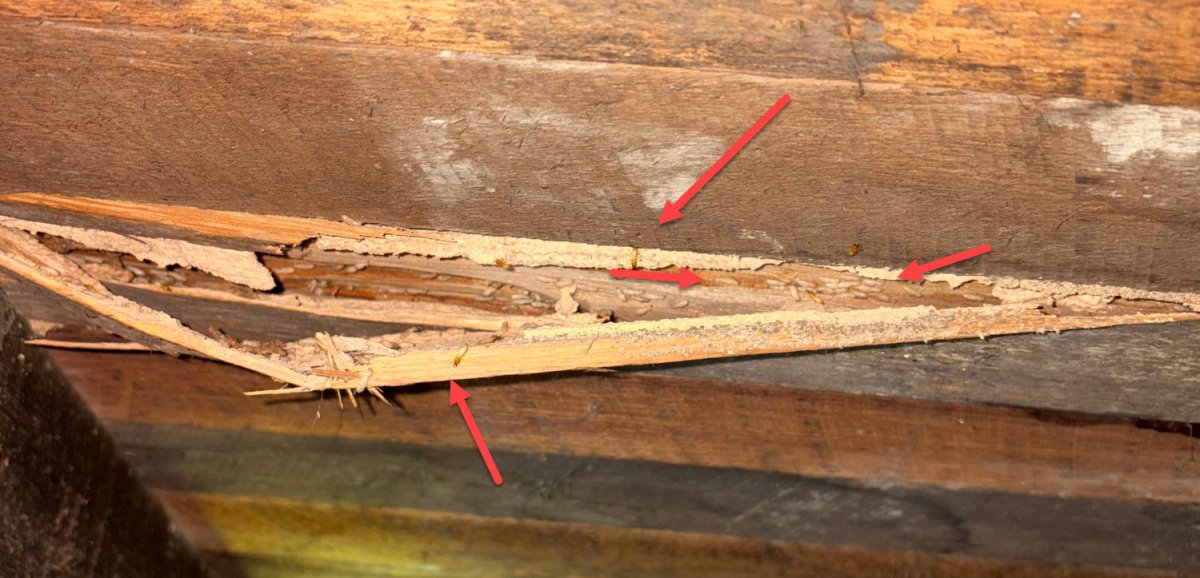
A pre-settlement inspection termite report tells you three things: whether termites are live, whether there is past activity, and whether damage is present. These are not the same problem.
Live termites means an active colony is in or near the building. This is the urgent case.
Past termite activity means termites were there once. They may be gone, or they may have moved. The report should say which.
Termite damage means timber has already been eaten. Damage can exist with no live termites, and live termites can exist with no visible damage yet. That gap is where most buyers get confused.
The report should also list:
- Where the inspector looked, and where they could not.
- Any concealed damage found behind walls or under floors.
- The termite barrier status, if one exists.
- Recommended treatment options and next steps.
Ask the inspector to mark the exact spots on a floor plan. A photo of a mud tube in a subfloor is far more useful in a negotiation than the word “activity”.
Pre-Settlement Inspection Termite Report: Reading It and Acting On It
Read the report like a detective, not a buyer. The language matters.
Look for words like “extensive”, “concealed”, “structural”, and “active”. These are the terms that change your negotiation. Softer words like “minor” or “historical” usually mean less urgency, but you still want a second opinion.
Ask the inspector three questions:
- Is the colony still active?
- Is the damage structural or cosmetic?
- What is the treatment plan, and how long does it take?
If the answers are vague, get an independent specialist assessment. We often get called in for a second look, and it is money well spent when a six-figure purchase is on the line.
Redback Pest Control Sydney uses trained termite detection dogs and the Sentricon® system for termite control.
Seller Responsibility for Termite Damage: Who Pays and How to Negotiate
Seller responsibility for termite damage is decided by the contract, not by fairness. In most standard contracts, the vendor is not automatically liable for pre-existing termites, and the property is sold in its current condition unless a clause says otherwise.
That is why the answer to “who pays?” is really three questions:
- Does the contract include a pest or building inspection clause with a remedy?
- Was the termite activity disclosed in the vendor’s statement or inspection report?
- Is the issue active, historical, or damage-only?
If a valid clause is triggered, you usually have a right to negotiate, delay, or terminate. If no clause exists and the issue was disclosed, you generally take the property as-is. If the issue was known to the vendor and deliberately concealed, that is a different conversation and one for your conveyancer.
What You Can Actually Ask For
- Vendor pays for treatment before settlement. Best for live termites with limited damage. The vendor arranges a licensed technician and provides the treatment certificate before settlement.
- Price reduction. You take the property and the problem. Best when damage is known, costed, and you are happy to manage repairs yourself.
- Vendor completes repairs before settlement. Best for structural damage with a clear scope. Insist on a written scope, a licensed builder, and evidence of completion.
- A combination. Vendor pays for treatment, you accept a smaller credit for cosmetic repairs.
- Terminate. Only if a contract clause allows it. Walking away without a legal basis can cost you the deposit.
How to Negotiate Without Losing the Deal
Put every request in writing through your conveyancer, not through the agent. Verbal promises from an agent are not enforceable at settlement.
A common pattern practitioners see:
- Get a written treatment quote from a licensed termite specialist.
- Get a separate repair quote from a licensed builder if damage is structural.
- Send both to your conveyancer with a clear ask: treatment paid by vendor, credit for repairs, or both.
- Set a response deadline that fits your finance and settlement dates.
- Get any agreement varied into the contract, not left as an email.
| Option | What It Means | Best For | Watch Out For |
|---|---|---|---|
| Vendor pays for treatment | Vendor arranges and pays before settlement | Live termites, minor damage | Confirm certificate is issued before settlement |
| Price reduction | You take the property and the problem | Damage is known and costed | Reduction must be reflected in the contract |
| Vendor repairs | Vendor fixes damage before settlement | Structural damage, clear scope | Scope creep and quality of work |
| Terminate | You exit under a contract clause | Major concealed damage | Only valid if a clause is triggered |
Never accept a verbal assurance that the vendor “will sort it out after settlement”. Once you settle, the leverage is gone.
If the Vendor Refuses to Move
If the vendor refuses treatment, a credit, or repairs, your options narrow to what the contract allows. Your conveyancer will tell you whether you can terminate, whether you must proceed, and what a failure to settle would cost. In many cases, buyers proceed and budget for treatment themselves because the cost of walking away is higher than the cost of fixing the problem.
For buyers who proceed, book treatment before you move in. Redback Pest Control Sydney can inspect, treat, and set up a barrier so the problem does not follow you into the new home.
Can Settlement Be Delayed for Termite Damage?
Yes, settlement can be delayed, but only with agreement or a contract clause. You cannot simply refuse to settle because you found termites.
Delaying settlement usually needs:
- The vendor’s written agreement, or
- A clause that allows an extension, or
- A lender or insurer requirement.
If you delay without a legal basis, you can be in default. That can cost you your deposit and expose you to a damages claim.
A short delay is often enough to get a specialist assessment, a treatment quote, and a repair scope. Two to four weeks is common. Anything longer needs a clear reason and a paper trail.
The fastest path is usually a price reduction, not a delay. You get the property on time, and you control the repair work yourself.
Decision Framework: Proceed, Renegotiate, Delay, or Terminate
Use this framework to pick your path. It is the same one we walk buyers through when they call us after a positive finding. The goal is not to pick the most aggressive option. It is to pick the option your contract actually supports.
Step 1: Confirm the Finding
Get a specialist assessment if the report is unclear. Ask for:
- A written statement of whether the colony is active.
- A floor plan marking the exact locations of activity and damage.
- A view on whether damage is structural or cosmetic.
- A treatment recommendation with a timeframe.
Step 2: Cost the Fix
Get a written treatment quote from a licensed termite specialist and, if damage is structural, a separate repair quote from a licensed builder. Two numbers, not one, because treatment and repairs are different jobs.
Step 3: Match to Your Contract
Ask your conveyancer three questions in writing:
- Does a pest or building inspection clause apply, and what remedy does it give?
- Is the cooling-off period still open?
- Does the finance clause give you an exit if the lender revalues or withdraws?
Step 4: Choose Your Path
- Proceed if damage is minor, the price reflects it, and you are comfortable managing treatment after settlement.
- Renegotiate if you want the property but need the numbers to work. Ask for treatment paid by the vendor, a price reduction, or both.
- Delay if you need time for a specialist assessment, a repair scope, or finance approval. Two to four weeks is common and usually needs the vendor’s written agreement.
- Terminate if damage is severe, concealed, or structural, and a contract clause allows it.
Step 5: Document Everything
Before settlement, make sure you hold:
- Written advice from your conveyancer.
- The full inspection report, not a summary.
- Written treatment and repair quotes.
- Any contract variation signed by both parties.
- A treatment certificate and warranty from the technician, if treatment was completed pre-settlement.
- Invoices and receipts for any work the vendor agreed to complete.
Settlement-Day Safeguards
- Do a final inspection and record the property’s condition, including any treated areas.
- Confirm in writing that agreed work was completed to the agreed scope.
- Keep copies of treatment certificates, warranties, and product documentation for your records.
- Ask your conveyancer to confirm the vendor has disclosed any known termite history in the contract documents.
For buyers who proceed, book treatment before you move in. Redback Pest Control Sydney can inspect, treat, and set up a barrier so the problem does not follow you into the new home.
Frequently Asked Questions
Can I delay settlement if termites are found?
Yes, you can request a delay if your purchase contract includes a condition allowing it, or if both parties agree to vary the settlement date. The seller is not automatically obligated to delay unless the contract specifies this. Speak with your conveyancer immediately to understand your rights and negotiate a reasonable extension for further assessment or treatment.
Who is responsible for termite damage discovered before settlement?
Responsibility depends on your purchase contract and whether the seller failed to disclose known issues. In many cases, the seller is responsible if they knew about the termite damage and did not disclose it. However, if the contract states ‘buyer beware’ or the property is sold ‘as is’, you may bear the cost. Review your contract with a conveyancer.
Should I get an independent termite inspection before settlement?
Yes, always get an independent termite inspection from a qualified pest controller before settlement. A pre-settlement inspection termite report gives you a clear picture of live termites, past activity, and damage. This report helps you negotiate repairs, request treatment, or make an informed decision about proceeding with the purchase.
What should a pre-settlement inspection termite report include?
A thorough pre-settlement inspection termite report should document any live termites, evidence of past activity, termite damage to timber, and conditions that may attract termites. It should also include recommendations for treatment and prevention. This report is critical for understanding your risks and negotiating with the seller before settlement.